Plastic Surgery in Turkey
The common cosmetic procedures, what each one actually involves, and the questions that protect your result.
- Typical package price in Turkey (2026)
- €2,000 – €6,000
- Time in Turkey
- 5–7 days
Indicative range from published package prices; your written quote depends on your case. · Updated:

At a glance
- Typical package price in Turkey (2026)
- €2,000 – €6,000
- Procedure time
- 1–4 hours
- Anaesthesia
- General, or local with sedation
- Hospital stay
- Same day to 2 nights
- Time in Turkey
- 5–7 days
- Recovery
- Back to desk work in 2–3 weeks
- Final result
- 3–12 months, depending on procedure
"Plastic surgery" is a category, not a single operation. It covers procedures that reshape or restore the face and body, from a nose that changes your profile to removing loose skin after major weight loss. Turkey is one of the busiest destinations for aesthetic surgery, and the same city can hold both excellent surgeons and unsafe operators. This page explains the common procedures, what recovery really looks like, and how to choose well.
The procedures people travel for
Most international patients come for one of a handful of well-established operations. Each has a different technique, recovery and risk profile:
- Rhinoplasty (nose reshaping) — changes the size or shape of the nose, and can also improve breathing. One of the most technically demanding procedures; the final shape settles slowly.
- Liposuction — removes localised fat deposits (flanks, abdomen, thighs, chin). It contours areas that resist diet and exercise; it is not a weight-loss treatment.
- Abdominoplasty (tummy tuck) — removes excess skin and tightens the abdominal wall, usually after pregnancy or weight loss. It leaves a long, low scar.
- Breast augmentation — increases breast size or restores volume using implants (or, in some cases, fat transfer).
- Brazilian Butt Lift (BBL / gluteal fat grafting) — transfers your own fat to the buttocks. Be aware: BBL carries the highest death rate of any cosmetic procedure, from fat entering the bloodstream. It should only be done by an experienced plastic surgeon who injects fat in the safe subcutaneous layer, ideally under ultrasound guidance. Choose the surgeon here more carefully than the price.
How the surgery is done
Larger procedures (tummy tuck, breast surgery, most rhinoplasty) are performed under general anaesthesia in a fully equipped operating theatre with an anaesthetist present. Smaller, localised work such as limited liposuction can sometimes be done under local anaesthesia with sedation ("twilight" sedation), where you are relaxed and pain-free but not fully asleep. Operating times range from roughly one hour for a straightforward augmentation to three or four hours for a full tummy tuck.
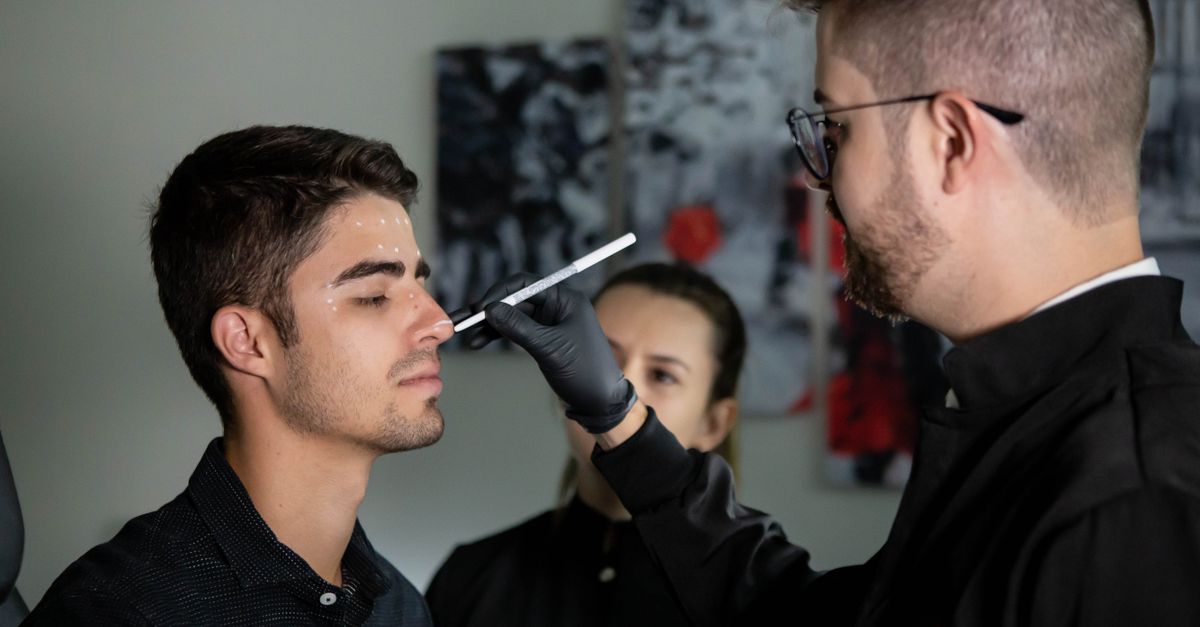
Consultation and markings
The surgeon examines you, agrees a realistic plan, and marks the surgical sites while you are standing. This is also when honest limits should be set.
Anaesthesia
General anaesthesia or local plus sedation is given and monitored. Your airway, oxygen and vital signs are watched throughout.
The operation
The surgeon works through the planned incisions — reshaping, removing tissue, or placing implants. Drains are sometimes left to prevent fluid build-up.
Recovery room and first night
You wake in recovery, are monitored for pain, bleeding and nausea, and — for body procedures — usually stay one to two nights before discharge.
| Procedure | Usual anaesthesia | Operating time | Inpatient stay |
|---|---|---|---|
| Rhinoplasty | General | 1.5–3 hrs | Day case or 1 night |
| Liposuction (per area) | Local + sedation or general | 1–3 hrs | Day case or 1 night |
| Breast augmentation | General | 1–2 hrs | Day case or 1 night |
| Abdominoplasty | General | 2–4 hrs | 1–2 nights |
| BBL (fat grafting) | General | 2–4 hrs | 1–2 nights |
Typical figures for otherwise healthy patients. Your surgeon sets the real plan after assessment.
Scars, and what "natural" really means
Any incision leaves a permanent scar — surgery cannot avoid this. A skilled surgeon places scars where they hide: inside the nostril, in the crease under the breast or around the areola, low across the bikini line for a tummy tuck. Scars mature over 12 to 18 months: they usually start red or raised, then flatten and fade to a pale line. They soften but never disappear completely, and genetics, skin tone and sun exposure all affect the outcome. A "natural" result is not about being scarless — it means the change looks proportionate to your face or body and keeps you looking like yourself, not obviously operated on.
Recovery timeline
Day 1–3
Swelling and bruising peak
Expect tightness, bruising and discomfort, controlled with prescribed pain relief. Dressings, a compression garment or drains may be in place. Rest and gentle movement only.
Week 1
Reviews and dressings
Splints, some sutures or drains are removed and the surgeon checks healing. Bruising starts to fade. Most people are up and walking short distances.
Week 2–3
Back to light activity
Many patients return to desk work and everyday routines, though swelling is still visible and you should avoid strain, bending and lifting.
Week 4–6
Swelling settles
The bulk of the swelling resolves and exercise is reintroduced gradually, only with your surgeon's clearance.
Month 3–6+
The result appears
Tissues settle into their final shape and scars keep maturing. A nose can take up to 12 months to show its final result.
What it costs — and why Turkey is cheaper
Aesthetic surgery in Turkey typically costs 50–60% less than in the UK, Western Europe or the US. The gap comes from lower staff, facility and overhead costs, a favourable exchange rate, and high case volume — not from cutting corners in a properly accredited operating theatre. Prices are approximate and always set after an individual assessment; complexity, implant choice and whether you combine procedures all move the figure. The ranges below are indicative surgeon-and-facility fees, not the cheapest package advert you will see online.
| Procedure | Typical range (EUR) |
|---|---|
| Rhinoplasty | €2,500 – €5,000 |
| Liposuction (per area / package) | €2,000 – €4,500 |
| Breast augmentation | €3,000 – €5,500 |
| Abdominoplasty (tummy tuck) | €3,000 – €6,000 |
| BBL (fat grafting) | €3,000 – €6,000 |
Approximate 2026 ranges. Final quotes depend on your assessment and are confirmed in writing.
€2,000–6,000
typical fee range for common procedures
5–7 days
usual stay in Turkey before flying home
12–18 mo
for scars to fully mature and fade
Choosing a surgeon safely
The single most important check is who holds the scalpel. Your operation should be performed by a fully qualified plastic surgeon — a specialist in plastic, reconstructive and aesthetic surgery — not a "technician", a general practitioner, or a doctor from an unrelated specialty. Bodies like the American Society of Plastic Surgeons (plasticsurgery.org) define the board-certification standard you should look for, and the same principle applies wherever you travel: ask for the operating surgeon's name and credentials in writing, confirm the hospital is accredited, and read independent reviews rather than the clinic's own gallery. On WhichClinic, a Verified badge means the clinic's licence documents have been checked; listings without a badge have not, so run these checks yourself before you compare prices.
Two promises that should worry you
Be wary of any clinic that guarantees a flawless, scar-free or "perfect" result — no honest surgeon can. Be equally wary of combined mega-operations that bundle four or five procedures into one long session to sell a package. Longer operating times raise anaesthetic and blood-clot risk; safer surgeons cap total time and stage complex work across separate visits.
General information, not medical advice
This page is general information only. Whether a procedure is right for you, which technique suits your anatomy, and what results are realistic all depend on an in-person assessment by a qualified plastic surgeon. Always follow the advice of the doctor who examines you.
The best cosmetic result is the one that still looks like you. Choose the surgeon before the price, insist on realistic expectations, and treat any clinic that promises perfection as the one to walk away from.
— WhichClinic Editorial Team
Clinics offering Plastic Surgery in Istanbul
Stars are Google ratings (third-party data), not WhichClinic reviews. Listings are compiled from public business data. Confirm that the clinic performs this procedure when you request a quote.
- 15.0 (1,378)
Beşiktaş, Istanbul
- 25.0 (766)
Güngören, Istanbul
- 35.0 (556)
Küçükçekmece, Istanbul
- 45.0 (398)
Kadıköy, Istanbul
- 55.0 (339)
Kartal, Istanbul
- 65.0 (325)
Bahçelievler, Istanbul
- 75.0 (230)
Üsküdar, Istanbul
- 85.0 (225)
Kadıköy, Istanbul
Get free quotes for Plastic Surgery in Turkey
Tell us what you need and receive tailored offers from matched clinics — free, private and with no obligation.
- Verified badge only after document checks
- Free and no obligation
- Compare multiple offers side by side
Your details stay private — shared only with matched clinics.
Frequently asked questions
You feel nothing during the operation — either under general anaesthesia or local anaesthesia with sedation for smaller procedures. Afterwards, expect soreness, tightness and swelling for several days, managed with prescribed pain relief. Sharp or worsening pain is uncommon and should be reported to your surgeon straight away.
Any incision leaves a permanent scar, but a good surgeon hides them in natural creases — inside the nostril, under the breast or along the bikini line. Scars are red or raised at first and fade over 12 to 18 months; they soften but never disappear entirely. Sun protection and silicone gels help them mature better.
Most surgeons ask you to stay 5–7 days so they can remove sutures or splints and check for early complications. Flying too soon raises the risk of blood clots after body procedures. Get your surgeon's written clearance, and on the flight wear compression stockings, move your legs and stay hydrated.
Sometimes, but longer combined operations carry more anaesthetic and clotting risk. Reputable surgeons cap total operating time and decline "mega-makeovers" that bundle many procedures purely to sell a package. Fewer procedures, or work staged across separate visits, is usually the safer plan.
Some swelling and settling is normal for months, so a final judgement should wait until the tissues have healed. If a genuine problem remains, revision surgery may help — but it is a second operation with its own risks and often its own cost. Before you book, ask in writing how revisions and follow-up care are handled.
Sources
Medical background was checked against these references. This guide is educational and does not replace a consultation with a qualified doctor.