
Liposuction in Turkey
Targeted body contouring in Turkey — remove stubborn fat pockets, not a substitute for weight loss.
- Typical package price in Turkey (2026)
- €2,000 – €4,500
- Time in Turkey
- 5–7 days
Indicative range from published package prices; your written quote depends on your case. · Updated:
Full specialty guide
At a glance
- Typical package price in Turkey (2026)
- €2,000 – €4,500
- Procedure time
- 1–3 hours
- Anaesthesia
- General, or local with sedation
- Hospital stay
- Same day or 1 night
- Time in Turkey
- 5–7 days
- Recovery
- Back to desk work in 2–4 weeks
- Final result
- Final contour at 3–6 months
Liposuction is one of the most requested body-contouring procedures for international patients in Turkey, and the price gap with Western Europe is a big part of the draw. But there is a crucial honesty point up front: liposuction is body contouring, not weight loss. It removes localised, diet-resistant fat pockets to refine your shape — it is not a treatment for obesity, and it is performed as real surgery, usually under general anaesthesia.
What liposuction is and how it works
Liposuction removes fat through a thin cannula inserted via tiny incisions, suctioning out fat cells from a defined area such as the abdomen, flanks, thighs or arms. It is carried out by a board-certified plastic surgeon and, for anything beyond very small areas, under general anaesthesia in an accredited hospital. The goal is a smoother, more proportionate contour — the amount of fat safely removed is limited, which is exactly why it is a shaping tool rather than a way to drop dress sizes.
Techniques you may be offered
| Technique | How it works | Notes |
|---|---|---|
| Traditional (SAL) | Manual suction through a cannula | Reliable and widely used |
| Tumescent | Fluid injected first to numb and reduce bleeding | Now standard in most modern lipo |
| Power-assisted (PAL) | A vibrating cannula loosens fat | Less surgeon fatigue, even removal |
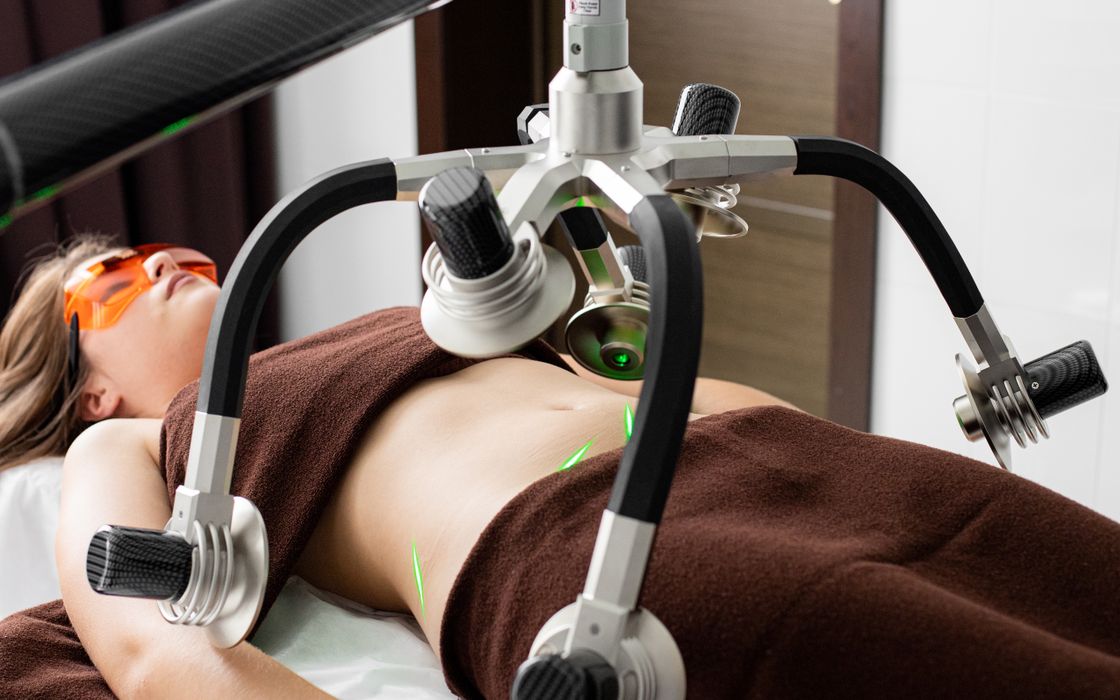
| Laser-assisted | Laser energy liquefies fat before suction | Marketed for skin tightening; evidence is modest |
No technique makes lipo 'weight loss' — they differ mainly in how fat is loosened and removed.
Who liposuction is suitable for
- People near their target weight with stubborn, localised fat that resists diet and exercise
- Those with good skin elasticity, so skin retracts smoothly after fat is removed
- Non-smokers in good general health, cleared for anaesthesia
- Patients with realistic expectations — refinement of shape, not a number on the scale
- Not suitable as an obesity treatment or a replacement for a healthy lifestyle
The procedure step by step
Consultation & marking
The surgeon assesses your fat distribution and skin quality, then marks the target areas while you stand.
Anaesthesia
General anaesthesia (or, for small single areas, local with sedation) given by an anaesthetist.
Fat removal
Tumescent fluid is infiltrated, then fat is suctioned through small incisions to sculpt the contour.
Compression garment
A fitted garment is applied immediately to control swelling and help the skin settle.
Recovery & discharge
You are monitored, then usually discharged the same day or after one night, with local follow-up before flying.
Recovery timeline
Days 1–3
Soreness & drainage
Expect bruising, swelling and some fluid leakage from incisions. Wear the compression garment as directed.
Days 5–7
Up and about
Many people manage light walking and can travel home around now with clearance.
Weeks 2–4
Back to work
Desk work resumes; bruising fades. Keep wearing the garment for the recommended weeks.
Weeks 6–8
Exercise returns
Gradual return to full activity once your surgeon confirms healing.
3–6 months
Final contour
Swelling fully resolves and the definitive shape appears over three to six months.
Results and how long they last
The fat cells removed by liposuction do not grow back, so results are long-lasting — but they are not immune to weight gain. If you gain weight afterwards, the remaining fat cells enlarge and your contour can change, sometimes unevenly. In other words, lipo gives you a better starting shape; keeping it depends on a stable weight and healthy habits. Skin quality matters too: where elasticity is limited, some looseness may remain and a tummy tuck (not lipo) is the tool for excess skin.
Cost in Turkey and what's included
| Area(s) treated | Typical price in Turkey |
|---|---|
| Single small area (e.g. chin, arms) | €2,000 – €2,600 |
| Two to three areas (e.g. abdomen + flanks) | €2,600 – €3,500 |
| Multiple areas / larger volume | €3,500 – €4,500 |
| Add-on compression garment & aftercare | Often included in package |
Indicative package prices; the number and size of areas is the main driver.
€2,000
Typical starting package price
5–7 days
Recommended stay in Turkey
3–6 months
Time to the final contour
Choosing your clinic safely
- Confirm a board-certified plastic surgeon performs the surgery — not a technician or 'aesthetician'
- Insist on an accredited hospital with an anaesthetist, especially for multiple or larger areas
- Ask how much fat they plan to remove — safe limits exist and mega-volume lipo is dangerous
- Check the compression garment, medications and follow-up are included in writing
- Be sceptical of clinics that market lipo as 'weight loss' or promise dramatic scale changes
High-volume lipo and same-day combinations carry real risk
Removing very large amounts of fat, or stacking liposuction with several other procedures in one session under general anaesthesia, increases the risk of fluid shifts, blood loss and, rarely, clots. More is not better. A responsible surgeon caps the volume, may stage treatment, and prioritises your safety over an impressive 'before-and-after'. Compression and early mobility also help reduce clot risk when you travel.
Medical disclaimer
This guide is general information, not medical advice. Whether liposuction suits you, and how much can be removed safely, can only be judged by a qualified surgeon after an in-person assessment. Always seek a personal consultation before deciding.
Liposuction sculpts what diet and exercise leave behind — it refines a shape, it does not shrink a number. Judge it by proportion, not by the scale.
— WhichClinic Editorial Team
Clinics offering Liposuction in Istanbul
Stars are Google ratings (third-party data), not WhichClinic reviews. Listings are compiled from public business data. Confirm that the clinic performs this procedure when you request a quote.
- 15.0 (1,378)
Beşiktaş, Istanbul
- 25.0 (766)
Güngören, Istanbul
- 35.0 (339)
Kartal, Istanbul
- 45.0 (325)
Bahçelievler, Istanbul
- 55.0 (230)
Üsküdar, Istanbul
- 65.0 (225)
Kadıköy, Istanbul
- 75.0 (225)
Kadıköy, Istanbul
- 85.0 (160)
Şişli, Istanbul
Get free quotes for Liposuction
Tell us what you need and receive tailored offers from matched clinics — free, private and with no obligation.
- Verified badge only after document checks
- Free and no obligation
- Compare multiple offers side by side
Your details stay private — shared only with matched clinics.
Frequently asked questions
No. Liposuction is body contouring, not weight loss. It removes localised, diet-resistant fat to improve your shape, and the amount removed safely is limited. It works best for people already near their target weight.
It can be safe when a board-certified plastic surgeon operates in an accredited hospital with an anaesthetist. The biggest risks come from very high-volume removal or bundling many procedures at once — so ask about planned volume and facilities.
Expect soreness, bruising and a feeling like a deep workout ache for the first few days rather than sharp pain. The compression garment actually helps comfort, and prescribed painkillers manage most discomfort.
Most surgeons advise staying about 5–7 days so swelling settles and you are checked first. Early mobility, the compression garment and following flight timing all help lower the small risk of blood clots.
The removed fat cells do not return, so results last — but they are not weight-proof. Gaining weight afterwards enlarges remaining fat cells and can change your contour, so a stable weight is key.
Lower running costs, exchange rates and high surgical volume, not lower-quality care. Reputable clinics use the same equipment and safety standards you would expect in Western Europe.
Sources
Medical background was checked against these references. This guide is educational and does not replace a consultation with a qualified doctor.