
Keratoconus Treatment in Turkey
Stop keratoconus getting worse with cross-linking, then sharpen vision with lenses, rings or surgery — with honest 2026 Turkey prices.
- Typical package price in Turkey (2026)
- €1,000 – €5,000
- Time in Turkey
- 5–7 days (longer for a transplant)
Indicative range from published package prices; your written quote depends on your case. · Updated:
Full specialty guide
At a glance
- Typical package price in Turkey (2026)
- €1,000 – €5,000
- Procedure time
- About 1 hour per eye (cross-linking)
- Anaesthesia
- Numbing eye drops (topical anaesthesia)
- Hospital stay
- None — outpatient day case
- Time in Turkey
- 5–7 days (longer for a transplant)
- Recovery
- 3–7 days for desk work
- Final result
- Stability confirmed after 6–12 months
Keratoconus makes the cornea thin and bulge into a cone, blurring and distorting vision, usually from the late teens onwards. Treatment has two goals: stopping progression with corneal cross-linking, and improving vision with specialty lenses, corneal rings, an implantable lens or, in advanced cases, a transplant. In Turkey, cross-linking typically costs €1,000–€2,200 per eye and most patients stay 5–7 days.
What keratoconus is and how treatment works
In keratoconus the cornea, the clear window at the front of the eye, thins and steepens, causing irregular astigmatism that glasses cannot fully correct. It usually affects both eyes, often unevenly, and tends to worsen over 10–20 years before slowing. About 1 in 10 patients has an affected parent; eye allergies, heavy eye rubbing and some connective tissue disorders are also linked — so stop rubbing your eyes.
Diagnosis and proof of progression
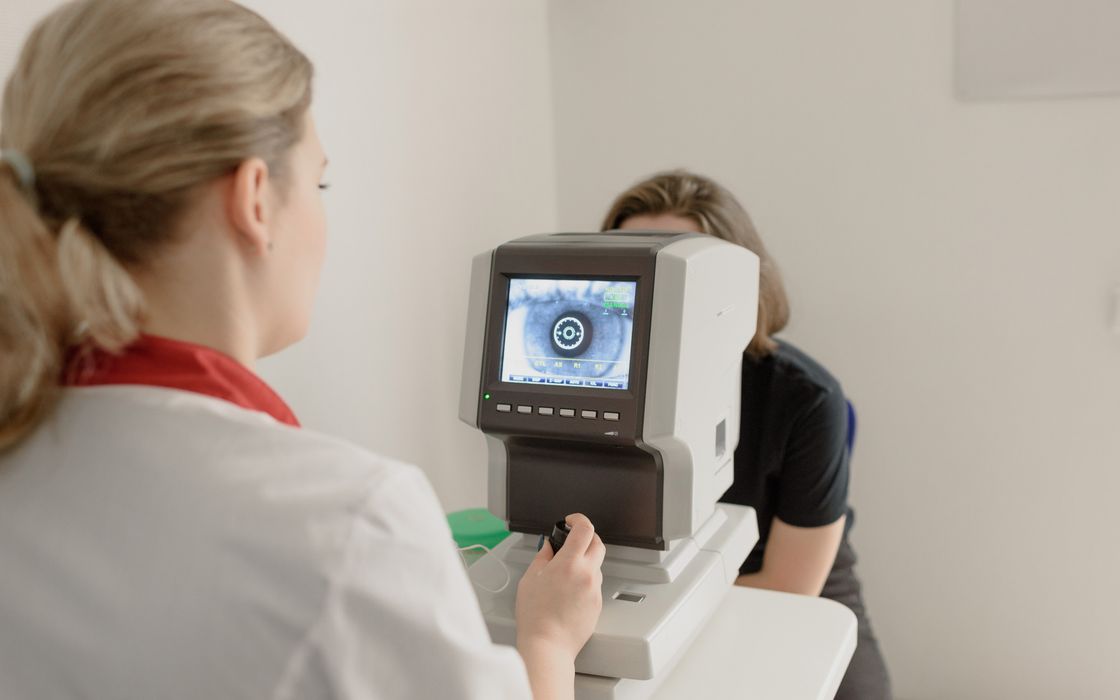
Diagnosis relies on corneal topography and tomography: computerised maps of both corneal surfaces and of corneal thickness. One scan confirms keratoconus; progression is shown by comparing scans taken months apart, ideally on the same device, for further steepening or thinning. Contact lenses temporarily reshape the cornea, so you may be asked to leave them out before measurements.
Keratoconus treatment options compared
| Option | What it does | Usually suited to | Evidence and caveats |
|---|---|---|---|
| Epi-off cross-linking | Surface removed; riboflavin and UV light stiffen the cornea | Progressive disease, cornea about 400 µm or thicker | Longest track record; NICE rates evidence adequate |
| Epi-on or accelerated cross-linking | Surface kept, or stronger UV for less time | Chosen case by case | Faster recovery; epi-on generally less reliable |
| Intracorneal ring segments (ICRS) | Small plastic arcs flatten the cornea | Mild to moderate cases, lens intolerance | Improve vision; do not stop progression |
| Topography-guided PRK + cross-linking | Limited laser smoothing, then cross-linking | Selected, thicker corneas | Evidence for combined procedures is limited |
| Specialty lenses (rigid, hybrid, scleral) | A smooth optical surface over the cone | Most stages, including advanced | Non-surgical; several fitting visits |
| Implantable lens (ICL) | Corrects short sight inside the eye | Stable keratoconus, often after cross-linking | Does not treat the cone |
| Corneal transplant (DALK or PK) | Donor tissue replaces front layers (DALK) or full thickness (PK) | Advanced disease or scarring | Slow recovery; lifelong rejection risk |
Cross-linking protects the cornea; the other options improve vision.
Epi-off vs epi-on: what the evidence says
In standard epi-off cross-linking the thin surface layer is removed so riboflavin can penetrate; it has the most evidence, and NICE considers it suitable for routine use. Epi-on cross-linking keeps the surface, so it is more comfortable and heals faster, but reviews generally find it less effective at halting progression, and NICE advises it only with special arrangements or in research. Accelerated protocols shorten UV exposure with broadly similar results, though some studies favour the standard protocol.
Who is a good candidate
- Cross-linking: keratoconus progressing on repeat scans, especially in teenagers and young adults, with a cornea of about 400 µm or more
- Rings: mild to moderate keratoconus, a clear central cornea and contact lens intolerance
- Specialty lenses: almost anyone no longer seeing sharply in glasses — often the first step
- Transplant: advanced disease with scarring, or when lenses no longer give useful vision
Who should wait or choose another option
- Mild, stable keratoconus with good vision in glasses or lenses — monitoring may be enough
- Corneas below the safe thickness for standard cross-linking, or with central scarring
- Active eye infection, previous herpes eye infection, uncontrolled allergy or pregnancy — treatment is usually postponed or adapted
Why LASIK is ruled out
LASIK cuts a flap and removes corneal tissue, further weakening an already weak cornea; the American Academy of Ophthalmology lists keratoconus among the conditions that rule it out. If you are offered standard LASIK, look elsewhere. Once the cornea is stable, some eyes suit a limited, topography-guided PRK with cross-linking, or an implantable lens (ICL) for high short sight.
The procedure step by step
Share your records first
Send your corneal maps (ideally two or more, months apart), prescription and eye history so a cornea specialist can suggest a plan before you book.
Assessment on arrival
New tomography, thickness measurements, vision tests and a slit-lamp examination confirm the plan and which eye to treat.
Cross-linking
Under numbing drops the surface is removed, riboflavin is applied for about 30 minutes, then UV light for around 30 minutes (less in accelerated protocols). A bandage contact lens goes on last.
Rings, if planned
A femtosecond laser or fine instrument creates a tunnel for one or two segments, on the same day as cross-linking or separately.
Checks and flying home
You are seen the next day and when the bandage lens comes out, usually within a week.
Recovery timeline
Days 1–3
Sore and light-sensitive
After epi-off treatment, pain, watering and light sensitivity are common. Use your drops, rest and wear sunglasses.
Days 4–7
The surface heals
The bandage lens comes out once the surface has closed. Vision is still blurred, but most people manage desk work within about a week.
Weeks 2–6
Vision fluctuates
A faint corneal haze is common and usually fades over months. Avoid eye rubbing and swimming; restart lenses only when your surgeon agrees.
Months 3–12
Stability is checked
Scans at around 3, 6 and 12 months show whether the cornea has stabilised; glasses or lenses are then refitted.
Follow-up once you are home
- Arrange a local ophthalmologist or specialist optometrist before you travel
- Take home full tomography printouts, the cross-linking protocol and, for rings, their exact type and size
- Keep yearly scans afterwards, as some corneas progress again
- After a transplant, expect visits every few months for one to two years while stitches are removed in stages
Results and how long they last
The aim of cross-linking is stability, not perfect sight. When it works the cornea stops steepening; the effect appears long-lasting in most eyes, but monitoring continues. Rings improve vision rather than halt disease: a 2026 systematic review found uncorrected vision typically improved by about 2–4 eye-chart lines, though benefits may fade and some rings are later removed. After a transplant, the NHS says vision can take up to 18 months to settle (partial thickness) or 2 years (full thickness), and most people still need glasses or lenses.
Risks and how to reduce them

- Pain and delayed healing after epi-off cross-linking
- Corneal haze, usually temporary; rarely, lasting scarring
- Infection (keratitis) — uncommon but potentially serious while the surface heals; use your drops exactly as prescribed
- Continued progression, sometimes needing repeat treatment
- Damage to the inner corneal lining if a too-thin cornea is treated
- Ring problems: migration or extrusion, deposits, glare or halos and occasional removal; femtosecond-laser tunnels are linked to fewer mechanical complications
- Transplant risks: rejection at any time, infection, raised eye pressure, cataract and astigmatism
Know the warning signs
Increasing pain, redness, discharge, light sensitivity or worsening vision after cross-linking or ring surgery can signal infection and needs same-day review. After a transplant, a red, painful, light-sensitive eye with blurred vision may mean rejection. Carry your clinic's emergency contact.
Cost of keratoconus treatment in Turkey and what's included
€1,000–€2,200
Cross-linking, typical price per eye
Day case
Hospital stay for cross-linking or rings
5–7 days
Recommended time in Turkey
| Treatment (per eye) | Typical 2026 price | Notes |
|---|---|---|
| Corneal cross-linking | €1,000–€2,200 | Usually includes scans, the procedure, bandage lens and early checks |
| Intracorneal ring segments | €1,500–€3,000 | Varies with ring type and planning |
| Rings plus cross-linking | €2,500–€5,000 | Same day or staged |
| Corneal transplant (DALK or PK) | €4,500–€10,000 | Longer stay and long follow-up |
Guide prices per eye for 2026, converted from published market ranges. Flights, specialty lenses and follow-up at home are usually extra.
Prices vary with the clinic, surgeon, protocol and ring type, and most quotes are per eye — check whether both eyes are included if both need treatment. Packages may add hotel nights and transfers; confirm what happens if healing is slow or re-treatment is needed. Only a written quote based on your scans is meaningful. You can get free quotes and compare other eye treatments in Turkey.
Choosing a clinic safely
- An accredited hospital or eye centre (for example JCI) with its own corneal tomography and, for rings, a femtosecond laser
- A specialist ophthalmologist registered in Turkey with real keratoconus experience — ask how many cross-linking and ring procedures they perform
- The Ministry of Health's health-tourism authorisation (Uluslararası Sağlık Turizmi Yetki Belgesi) for international packages
- A written quote stating per-eye or both-eye pricing, protocol, ring brand, follow-up visits and the re-treatment or ring-removal policy
- Realistic before-and-after scans from similar corneas
- Red flags: promises of perfect vision or a 'cure', no fresh scans, pressure to pay upfront, or any offer of standard LASIK
Plan the follow-up first
The treatment takes an hour; the follow-up lasts years. Before booking, agree who will repeat your scans at home.
Cross-linking protects the sight you still have; lenses, rings and transplants rebuild what has been lost. A good specialist decides which you need from your scans, not a price list.
— WhichClinic Editorial Team
Clinics offering Keratoconus Treatment in Istanbul
Stars are Google ratings (third-party data), not WhichClinic reviews. Listings are compiled from public business data. Confirm that the clinic performs this procedure when you request a quote.
- 1 5.0 (926)
- 25.0 (909)
Bakırköy, Istanbul
- 35.0 (270)
Şişli, Istanbul
- 45.0 (216)
Şişli, Istanbul
- 55.0 (201)
Bakırköy, Istanbul
- 65.0 (146)
Esenyurt, Istanbul
- 75.0 (138)
Ataşehir, Istanbul
- 85.0 (127)
Kadıköy, Istanbul
Get free quotes for Keratoconus Treatment (Corneal Cross-Linking, ICRS & Lenses)
Tell us what you need and receive tailored offers from matched clinics — free, private and with no obligation.
- Verified badge only after document checks
- Free and no obligation
- Compare multiple offers side by side
Your details stay private — shared only with matched clinics.
Frequently asked questions
No treatment reverses keratoconus completely. Cross-linking aims to stop it getting worse, while lenses, rings, an implantable lens or a transplant improve vision. With the right combination and regular monitoring, many people keep good, useful sight.
The procedure itself is done under numbing drops. After epi-off cross-linking, pain, watering and light sensitivity are common for the first two to three days while the surface heals; epi-on treatment is usually more comfortable. You will be given drops and pain relief.
Epi-off has the longest track record and the strongest evidence for halting progression. Epi-on is gentler and heals faster, but reviews generally find it less reliable, and NICE advises using it only with special arrangements or in research. The right choice depends on your cornea, your age and how fast the disease is changing.
No. LASIK removes corneal tissue and can make an already weak cornea bulge further, so keratoconus is a recognised reason not to have it. Once the cornea is stable, some patients are suitable for an implantable lens (ICL) or a limited topography-guided laser combined with cross-linking instead.
For cross-linking or rings, plan on about 5–7 days so the surgeon can check you the next day and remove the bandage lens once the surface has healed. A corneal transplant needs a longer stay and one to two years of follow-up, ideally with a cornea specialist near home.
Keratoconus usually affects both eyes, but often unevenly, so treatment is decided eye by eye. Some surgeons treat both eyes during one trip, others stage them. Always check whether a quote is per eye or for both eyes.
Usually, yes. Cross-linking stabilises the cornea rather than sharpening it, so most people still rely on glasses or specialty lenses, which are refitted once the cornea is stable. Rings or an ICL can reduce that dependence in suitable eyes.
In 2026, cross-linking typically costs about €1,000–€2,200 per eye, ring segments €1,500–€3,000 per eye and rings with cross-linking €2,500–€5,000 per eye. A corneal transplant costs more. Prices vary, so ask for a written quote after your scans have been reviewed.
Sources
Medical background was checked against these references. This guide is educational and does not replace a consultation with a qualified doctor.
- American Academy of Ophthalmology — What is keratoconus?
- NICE — Photochemical corneal collagen cross-linkage using riboflavin and ultraviolet A for keratoconus and keratectasia (HTG319, formerly IPG466)
- Journal of Clinical Medicine (PMC) — A review of keratoconus cross-linking treatment methods (2025)
- Journal of Clinical Medicine (PMC) — Clinical outcomes and complications after INTACS implantation in keratoconus: a systematic review (2026)
- American Academy of Ophthalmology — LASIK: who is a good candidate
- NHS — Cornea transplant