
Hip Replacement in Turkey
A new hip for arthritis pain that no longer responds to other care — with honest 2026 prices, recovery milestones and clot-safe travel advice.
- Typical package price in Turkey (2026)
- €8,000 – €15,000
- Time in Turkey
- 10–14 days
Indicative range from published package prices; your written quote depends on your case. · Updated:
Full specialty guide
At a glance
- Typical package price in Turkey (2026)
- €8,000 – €15,000
- Procedure time
- 1–2 hours
- Anaesthesia
- Spinal or general anaesthesia
- Hospital stay
- 3–5 nights
- Time in Turkey
- 10–14 days
- Recovery
- About 6 weeks for work and driving
- Final result
- Several months; up to a year
A hip replacement swaps a worn or damaged hip joint for an artificial one. It is a common and highly effective operation for arthritis pain and stiffness that no longer respond to other treatment, and one of the orthopaedic procedures international patients often travel for. In Turkey, a package for one hip typically costs €8,000–€15,000, and most patients plan 10–14 days in the country. This guide covers the options, recovery, real risks — including blood clots and flying home — and how to judge a hospital's joint team.
What hip replacement is and how it works
The hip is a ball-and-socket joint. In a total hip replacement, the surgeon removes the damaged ball at the top of the thigh bone, fits a metal stem carrying a new metal or ceramic ball, and lines the socket with a new cup — usually a metal shell with a plastic or ceramic liner. The parts are press-fitted so that bone grows onto them, fixed with bone cement, or a mix of both. Most patients have osteoarthritis; rheumatoid arthritis and damage after an injury are other common reasons. The operation usually takes 1–2 hours under a spinal or general anaesthetic.
Types of hip replacement, surgical approaches and implant materials
| Option | What is replaced | Typically used for |
|---|---|---|
| Total hip replacement | Ball and socket | Most people with hip arthritis — by far the most common type |
| Partial replacement (hemiarthroplasty) | The ball only | Frail patients or after a serious injury such as a fracture; faster recovery, but it usually does not last as long |
| Hip resurfacing | The ball is capped with metal, not removed | Selected patients around 50 or younger with strong bone |
Based on NHS descriptions. Your surgeon recommends the type after examining you and your X-rays.
Posterior or anterior approach?
The approach is the route the surgeon takes to the joint. NICE, England's clinical guideline body, recommends considering the established posterior (back) or anterolateral (side) approaches. The direct anterior approach is often marketed as muscle-sparing, but NICE found the evidence too limited to make a recommendation on it. In practice, the approach your surgeon performs routinely matters more than the route itself — be wary of clinics that sell one approach as a promise of faster recovery.
Implant bearing materials
| Bearing (ball / liner) | What to know |
|---|---|
| Metal on polyethylene | Longest track record; modern cross-linked polyethylene wears slowly |
| Ceramic on polyethylene | Widely used, particularly in younger, active patients |
| Ceramic on ceramic | Very low wear; small chance of squeaking or ceramic breakage |
| Metal on metal | Largely abandoned because wear debris caused health problems |
Ask for the brand, model and bearing of your implant in writing before you travel.
Who is a good candidate
- People whose hip pain limits walking, bending or putting on shoes, or continues at rest and at night
- Those who have already tried non-surgical treatment — weight loss, physiotherapy, walking aids, pain relief and sometimes steroid injections — without enough benefit
- Adults of any age: there is no strict age or weight limit, although most patients are 50–80
- Patients whose heart, lung and other conditions such as diabetes are well controlled
- Not suitable yet: people with an active infection, uncontrolled medical problems, or pain that actually comes from the lower back — spine problems can mimic hip pain
The procedure step by step
Remote review
You send recent hip X-rays, your medical history and medicines list. The surgeon confirms whether surgery is appropriate, and which implant is planned, before you book flights.
Preparing at home
Strengthening exercises, stopping smoking, losing weight if needed and good blood-sugar control lower the risk of complications.
Checks in Turkey
Blood tests, an ECG, X-rays and an anaesthetic assessment, usually the day before. Some medicines, such as blood thinners, may need pausing.
The operation
Under spinal or general anaesthetic, the joint is replaced in about 1–2 hours, commonly with a medicine to reduce bleeding and local anaesthetic around the joint.
Up and walking
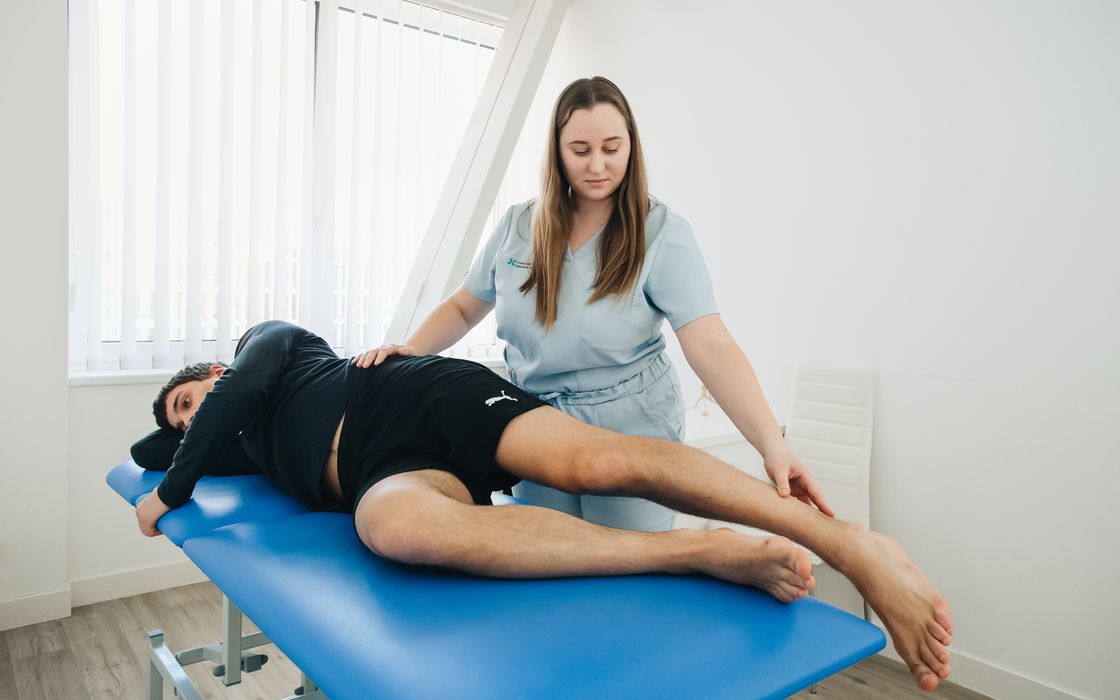
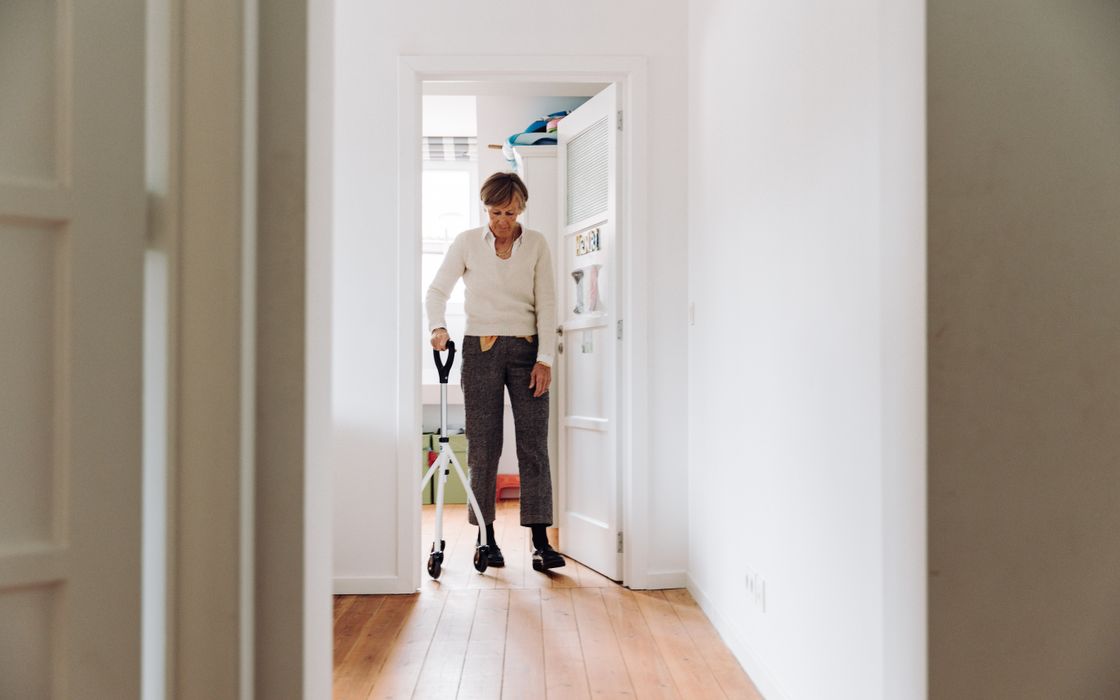
Physiotherapists usually get you walking with a frame or crutches on the day of surgery or the next day, and teach stairs before discharge.
Recovery timeline
Day 0–1
First steps
Walking with a frame or crutches, supervised by a physiotherapist. Regular pain relief and clot prevention begin.
Days 2–5
Leaving hospital
Discharge once you walk safely and manage stairs. Turkish packages usually include 3–5 nights.
Days 5–14
Hotel recovery
Daily walks and exercises. Stitches or clips usually come out around day 10, and the surgeon confirms you are fit to fly.
Weeks 2–6
Growing independence
Most light activities return within 3–6 weeks. Follow your hip precautions — typically no crossed legs, no bending beyond 90° and no low chairs.
Weeks 6–12
Driving and work
Driving usually after at least 6 weeks; many people return to work at around 6 weeks, depending on the job.
Months 3–12
Full recovery
Strength and stamina keep improving. Swimming, cycling and golf are usually fine; running and jumping are generally discouraged.
Results and how long they last
Most people have much less pain and move more easily after a hip replacement. Implants do wear, however, and some eventually need a second operation (revision). A 2019 Lancet analysis of national joint registry data found about 89% of hip replacements still in place after 15 years, 70% after 20 years and 58% after 25 years — figures that reflect implants fitted decades ago. The NHS says modern hip replacements are designed to last at least 15 years. A healthy weight and low-impact exercise help limit wear.
Risks and how to reduce them
- Blood clots in the leg veins (DVT) that can travel to the lungs — reduced with blood thinners, compression stockings, ankle exercises and early walking
- Dislocation of the ball from the socket — uncommon, and most likely in the first few months; your movement precautions lower the risk
- Infection — serious complications such as joint infection affect fewer than 2% of patients, according to the AAOS, but a deep infection can need further surgery
- Leg-length difference — usually too small to notice; occasionally a shoe raise helps
- Less common: nerve or blood-vessel injury, a fracture around the implant, stiffness, persistent pain, and loosening years later
Blood clots and flying home
Surgery and long journeys both raise the risk of deep vein thrombosis; the NHS counts trips of more than 4 hours as a risk factor. For an elective hip replacement, NICE recommends preventive treatment for several weeks — for example, heparin injections for 10 days followed by aspirin for another 28 days. Leave Turkey with the full course and fly only when your surgeon agrees. On board, wear compression stockings if prescribed, drink plenty of water, avoid alcohol and walk the aisle when you can.
Get help urgently
Throbbing pain, swelling or warmth in the calf or thigh can signal a clot. Sudden breathlessness or chest pain — especially during or after a flight — needs emergency care. Fever or pus from the wound can mean infection.
Cost of hip replacement in Turkey and what's included
€8,000–€15,000
Typical package price (one hip)
3–5 nights
Hospital stay
10–14 days
Recommended time in Turkey
| Item | Usually included? | What to check |
|---|---|---|
| Surgeon, anaesthetist and theatre | Yes | Who will actually operate |
| Implant | Yes | Brand, model and bearing named in the quote |
| Hospital stay and physiotherapy | Yes | Number of nights and sessions |
| Pre-operative tests and imaging | Usually | Whether CT or MRI costs extra |
| Hotel and transfers | Often | Step-free access |
| Take-home clot-prevention medicine | Varies | Whether the full course is supplied |
| Complications or revision | Varies | The policy in writing |
Prices vary with the hospital, the surgeon, the implant (ceramic bearings and robotic-assisted surgery usually cost more) and the nights included; flights and insurance are extra. These are typical 2026 ranges, not a quote — send your X-rays to get free quotes and compare written offers line by line.
Choosing a clinic safely
- An accredited hospital (for example, JCI) with a dedicated orthopaedic department that performs joint replacements routinely
- A specialist in orthopaedics and traumatology registered in Turkey — ask how many hip replacements the surgeon and hospital perform each year
- The Ministry of Health's international health-tourism authorisation (Uluslararası Sağlık Turizmi Yetki Belgesi)
- Standards NICE recommends: ultra-clean air in theatres, physiotherapy within 24 hours of surgery and a written clot-prevention plan
- A written quote covering the implant, nights, aftercare, follow-up X-rays and the complication or revision policy
- Red flags: pressure to book immediately, prices far below the market, no pre-operative assessment, or promises of a pain-free recovery
Why an experienced joint team matters
Anaesthetists skilled in spinal anaesthesia, physiotherapists who get you walking safely and nurses who spot a clot early all shape your recovery. Ask about the whole pathway, not just the surgeon's CV — and if a knee may need surgery later, see our knee replacement guide.
A new hip can give many years of easier walking, but the result is built by a whole team and by the weeks of exercise that follow. Choose the hospital, not just the price.
— WhichClinic Editorial Team
Clinics offering Hip Replacement in Istanbul
Stars are Google ratings (third-party data), not WhichClinic reviews. Listings are compiled from public business data. Confirm that the clinic performs this procedure when you request a quote.
- 1 5.0 (256)
- 25.0 (244)
Küçükçekmece, Istanbul
- 35.0 (192)
Şişli, Istanbul
- 4 5.0 (169)
- 55.0 (136)
Esenyurt, Istanbul
- 65.0 (131)
Avcılar, Istanbul
- 75.0 (114)
Şişli, Istanbul
- 84.9 (477)
Fatih, Istanbul
Get free quotes for Hip Replacement (Total Hip Arthroplasty)
Tell us what you need and receive tailored offers from matched clinics — free, private and with no obligation.
- Verified badge only after document checks
- Free and no obligation
- Compare multiple offers side by side
Your details stay private — shared only with matched clinics.
Frequently asked questions
An all-inclusive package for one hip typically costs €8,000–€15,000 in 2026. The price depends on the hospital, the surgeon, the implant and bearing, the number of nights and whether the hotel, transfers and take-home medicines are included. Always ask for a written, itemised quote.
Plan on about 10–14 days: usually 3–5 nights in hospital, followed by a hotel stay with physiotherapy and a wound check. Stitches or clips often come out around day 10, and your surgeon should confirm you are fit to fly before you book the return.
Only when your surgeon clears you, usually after the wound check. Surgery and journeys of more than 4 hours both raise the risk of blood clots, so keep taking your prescribed clot-prevention medicine, wear compression stockings if advised, drink plenty of water and walk the aisle when you can.
Registry data analysed in The Lancet in 2019 showed about 89% of hip replacements still in place after 15 years, 70% after 20 years and 58% after 25 years. Modern implants are designed to last at least 15 years, and a healthy weight and low-impact activity help to limit wear.
Not clearly. NICE recommends considering the posterior or anterolateral approach and found the evidence too limited to make a recommendation on the direct anterior approach. The surgeon's experience with their usual approach matters more than the incision itself.
Most people walk with a frame or crutches on the day of surgery or the next day. Light daily activities usually return within 3–6 weeks, driving after at least 6 weeks, and many people go back to work at around 6 weeks, depending on the job.
Possibly, but both suit specific situations. Resurfacing caps the ball with metal and may be offered to people around 50 or younger with strong bone. A partial replacement (hemiarthroplasty) replaces only the ball and is mainly used for frail patients or after a serious hip injury. Your surgeon will advise after reviewing your X-rays.
Sources
Medical background was checked against these references. This guide is educational and does not replace a consultation with a qualified doctor.
- AAOS OrthoInfo — Total hip replacement
- NHS — Hip replacement
- NICE NG157 — Joint replacement (primary): hip, knee and shoulder
- NICE NG89 — Venous thromboembolism in over 16s: reducing the risk of hospital-acquired DVT or PE
- The Lancet (PMC) — How long does a hip replacement last? Systematic review and meta-analysis of case series and national registry reports
- NHS — DVT (deep vein thrombosis): causes, long journeys and prevention