
ACL Surgery in Turkey
Surgery or rehab first, which graft, and when you can really play again — an evidence-based guide with honest 2026 prices in Turkey.
- Typical package price in Turkey (2026)
- €4,000 – €9,000
- Time in Turkey
- 7–10 days
Indicative range from published package prices; your written quote depends on your case. · Updated:
Full specialty guide
At a glance
- Typical package price in Turkey (2026)
- €4,000 – €9,000
- Procedure time
- 1–3 hours
- Anaesthesia
- General or spinal anaesthesia
- Hospital stay
- Same day or 1 night
- Time in Turkey
- 7–10 days
- Recovery
- Work in about 4–6 weeks (job-dependent)
- Final result
- Sport at 9–12 months, after testing
ACL reconstruction replaces a torn anterior cruciate ligament — the band that stops the shin bone sliding forward and the knee giving way when you twist — with a tendon graft. It is mainly for people whose knee keeps giving way, or who want to return to pivoting sports or heavy manual work. It is one of the orthopaedic procedures patients travel to Turkey for: a package typically costs €4,000–€9,000, with 7–10 days in the country. Rehabilitation — usually 9–12 months before pivoting sport — continues at home.
What ACL reconstruction is and how it works
A torn ACL heals poorly because it has a limited blood supply inside the joint, so surgeons usually replace it rather than stitch it. The operation is done by keyhole (arthroscopic) surgery: a camera checks the ligament, meniscus and cartilage, a graft is taken or prepared, and small tunnels are drilled in the thigh and shin bones. The graft is passed through them in the position of the original ligament and held with screws or similar devices that normally stay in permanently. Over the following months it heals into the bone and remodels.
Graft options: your own tendon or donor tissue
| Graft | Advantages | Drawbacks |
|---|---|---|
| Hamstring tendon (your own) | Small incisions; the NHS describes it as the usual choice | Temporary hamstring weakness; graft size varies |
| Patellar tendon (your own) | Bone-to-bone healing; long track record in athletes | More pain at the front of the knee and when kneeling; rare kneecap fracture |
| Quadriceps tendon (your own) | Thick, strong and increasingly used | Shorter track record; rare kneecap fracture |
| Donor tissue (allograft) | No second wound; shorter operation | Higher re-tear rate in young, active patients; tiny disease-transmission risk |
In the US MOON cohort, donor grafts had 5.2 times the odds of re-tearing compared with patellar tendon grafts; hamstring and patellar tendon grafts performed similarly.
Who is a good candidate — and when rehab alone may be enough
Not every torn ACL needs surgery. In a Swedish randomised trial of young, active adults with a fresh tear, starting with structured rehabilitation — operating later only if the knee stayed unstable — gave five-year results similar to early surgery, and about half of that group never had a reconstruction. For longer-standing injuries with ongoing instability, the UK ACL SNNAP trial found reconstruction gave better knee scores at 18 months. The AAOS suggests about 12 weeks of non-operative treatment for an isolated acute tear and, if surgery is needed, operating within about 5 months to protect the meniscus and cartilage.
- Your knee gives way in daily life or sport despite a proper course of physiotherapy
- You play pivoting sports such as football, basketball or skiing, or do heavy manual work — activity level matters more than age
- The tear comes with other damage, such as a repairable meniscus tear or another torn ligament
- You can commit to 9–12 months of rehabilitation before returning to sport
- Rehab alone may be reasonable if your knee feels stable and you avoid pivoting sports. Children need growth-plate-sparing techniques from an experienced surgeon
The procedure step by step
Remote review
Your MRI and examination findings are reviewed to confirm the tear and check the meniscus, cartilage and other ligaments. Send the MRI images, not just the report.
Prehabilitation
The goal is a calm knee before surgery: swelling down, full straightening, good bending and strong thigh muscles. A stiff, swollen knee recovers more slowly.
Checks in Turkey
Blood tests, an anaesthetic assessment and a final examination, usually the day before. Agree the graft and any extra procedures in writing.
Arthroscopic reconstruction
Under general or spinal anaesthetic, the surgeon treats any meniscus tear and places the graft through bone tunnels, typically in 1–3 hours.
Going home
Most people leave the same day or next morning with crutches, possibly a brace, pain relief, an exercise plan and clot-prevention advice.
Recovery timeline
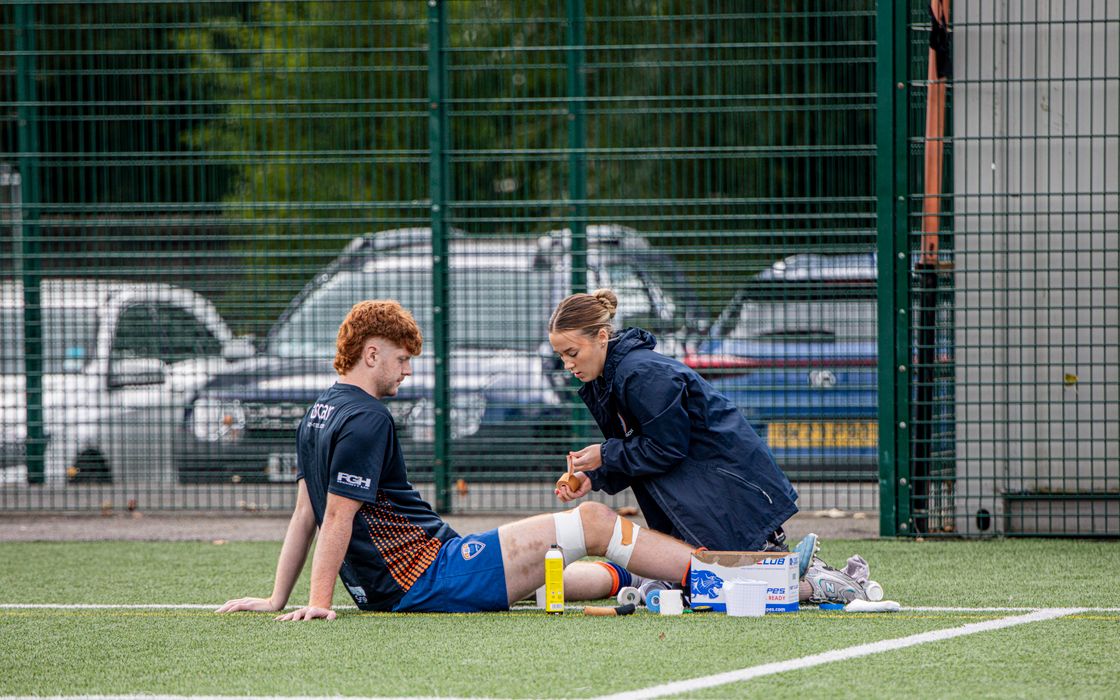
Weeks 0–2
Calm the knee
Crutches, ice, elevation and early exercises, aiming for full straightening and an active thigh muscle. A wound check comes before you fly.
Weeks 2–6
Walking normally
Crutches go when your physiotherapist allows — later after a meniscus repair. Many return to work after about 4–6 weeks, depending on the job.
Months 2–4
Strength building
Progressive strengthening, balance work and cycling. Driving resumes once you control the leg safely.
Months 4–6
Running and agility
Straight-line running, then agility drills, if strength and control tests allow.
Months 9–12
Return to sport
Pivoting sport usually resumes at 9–12 months, after passing strength and hop tests. Returning before 9 months is linked to more re-injuries.
Travelling home with a reconstructed knee
- Book extra legroom or an aisle seat, and request airport assistance in advance
- Keep crutches and any brace with you in the cabin, and tell the airline beforehand
- Ask your surgeon whether you need blood-thinning injections or compression stockings — sitting still on a flight soon after leg surgery adds to clot risk
- Drink plenty of water, avoid alcohol and do ankle pumps regularly
- Carry your operation note and rehab protocol for your physiotherapist at home
Results and how long they last
Most people regain a stable knee and return to everyday activities within a few months, although sport can take up to a year. Reconstruction restores stability but cannot promise your previous level, and in the Swedish trial early reconstruction did not reduce knee osteoarthritis at five years compared with rehabilitation first. An ACL injury raises the long-term risk of osteoarthritis, the most common reason people later need a knee replacement.
Risks and how to reduce them
- Graft re-tear or stretching: long-term instability affects about 5–10% of patients, according to the AAOS
- Stiffness — reduced by early straightening exercises; occasionally another procedure is needed
- Pain at the front of the knee or when kneeling, particularly after a patellar tendon graft
- Numbness of skin beside the incision — common and sometimes permanent
- Blood clots and infection — uncommon; early walking and clot-prevention advice lower the risk
Who is most likely to re-tear?
In the US MOON cohort of more than 2,400 reconstructions, 4.4% of grafts re-tore and 3.5% of patients tore the other knee's ACL during at least two years of follow-up. Younger age, higher activity levels and donor grafts raised the odds of a re-tear. In the Delaware-Oslo cohort, the re-injury rate fell by 51% for each month return to sport was delayed up to 9 months, and returning to high-level pivoting sport meant more than four times the re-injury rate. More symmetrical thigh strength lowered the risk.
Do not rush back
Feeling good at four or five months is common, but the graft is still maturing. Returning to pivoting sport before about 9 months, or before passing strength and hop tests, is linked to more re-injuries. Seek urgent help for calf pain or swelling, sudden breathlessness, fever or a hot, red knee.
Cost of ACL reconstruction in Turkey and what's included
€4,000–€9,000
Typical package price
Same day–1 night
Hospital stay
7–10 days
Recommended time in Turkey
| Item | Usually included? | What to check |
|---|---|---|
| Surgeon, anaesthesia and theatre | Yes | Who actually operates |
| Graft and fixation devices | Usually | Graft type in writing; donor grafts may cost more |
| Meniscus repair or other extras | Varies | The price if extra damage is found |
| Hospital stay | Yes | A night included if needed |
| Brace and crutches | Varies | Whether you keep them |
| Physiotherapy in Turkey | Often a few sessions | How many sessions |
| Hotel and transfers | Often | Lift or ground-floor access |
| Rehabilitation at home | No | Arrange a physiotherapist before you travel |
Prices vary with the hospital, the surgeon, the graft, any meniscus repair and the nights and physiotherapy bundled. These are typical 2026 ranges, not a quote: send your MRI to get free quotes and compare written offers. Most of your recovery — and its cost — happens at home.
Choosing a clinic safely
- An accredited hospital (for example, JCI) with a busy orthopaedic department that does arthroscopic knee surgery routinely, alongside joint operations such as hip replacement
- A specialist in orthopaedics and traumatology registered in Turkey — ask how many ACL reconstructions they do a year and whether they perform revisions
- The Ministry of Health's international health-tourism authorisation (Uluslararası Sağlık Turizmi Yetki Belgesi)
- A clear explanation of which graft suits you and why; one option for everyone is a warning sign
- A written plan covering graft, extra procedures, brace, physiotherapy, follow-up and the policy if the graft fails
- Red flags: promises of a quick return to sport, no MRI review before travel, or pressure to decide immediately
Line up your physiotherapist first
The operation takes a morning; rehabilitation takes most of a year. Before booking, find a physiotherapist at home experienced in ACL rehab and share the surgeon's protocol. If arthritis rather than a torn ligament is your main problem, reconstruction will not fix it.
A reconstructed ACL is only as strong as the rehabilitation behind it. Choose a surgeon who explains your options honestly, then give your knee the year it needs.
— WhichClinic Editorial Team
Clinics offering ACL Surgery in Istanbul
Stars are Google ratings (third-party data), not WhichClinic reviews. Listings are compiled from public business data. Confirm that the clinic performs this procedure when you request a quote.
- 1 5.0 (256)
- 25.0 (244)
Küçükçekmece, Istanbul
- 35.0 (192)
Şişli, Istanbul
- 4 5.0 (169)
- 55.0 (136)
Esenyurt, Istanbul
- 65.0 (131)
Avcılar, Istanbul
- 75.0 (114)
Şişli, Istanbul
- 84.9 (477)
Fatih, Istanbul
Get free quotes for ACL Reconstruction (Knee Ligament Surgery)
Tell us what you need and receive tailored offers from matched clinics — free, private and with no obligation.
- Verified badge only after document checks
- Free and no obligation
- Compare multiple offers side by side
Your details stay private — shared only with matched clinics.
Frequently asked questions
No. People with a stable knee who do not play pivoting sports often do well with physiotherapy alone. In a Swedish trial of young, active adults, starting with rehabilitation and operating later only if needed gave five-year results similar to early surgery. Reconstruction is usually advised if the knee keeps giving way, you play pivoting sports or other structures are damaged.
A package typically costs €4,000–€9,000 in 2026, depending on the hospital, the surgeon, the graft, any meniscus repair and how many nights, physiotherapy sessions and hotel days are included. Ask for an itemised written quote.
No graft is right for everyone. In the large MOON cohort, hamstring and patellar tendon grafts had similar re-tear rates, while donor grafts had about five times the odds of re-tearing — one reason they are usually avoided in young athletes. Patellar tendon grafts cause more kneeling pain. Your surgeon should explain the choice for your knee.
Most people plan 7–10 days. You usually leave hospital the same day or the next morning, then have physiotherapy and a wound check before flying. Ask whether you need clot-prevention medicine or compression stockings for the journey, and book extra legroom or an aisle seat.
Usually at 9–12 months, and only after passing strength and hop tests. In the Delaware-Oslo cohort, the re-injury rate fell by about half for each month that return to sport was delayed, up to 9 months.
It depends on your surgeon's protocol and on whether a meniscus was repaired. After an isolated reconstruction, many people walk without crutches within a few weeks; a meniscus repair usually means longer. Some surgeons use a brace and others do not — your physiotherapist will tell you when to stop.
Yes. In the MOON cohort, 4.4% of grafts re-tore and 3.5% of patients injured the other knee over at least two years. Younger age, high activity levels, donor grafts and an early return to pivoting sport raise the risk; strength, balance and patience lower it.
Sources
Medical background was checked against these references. This guide is educational and does not replace a consultation with a qualified doctor.
- AAOS OrthoInfo — ACL injury: does it require surgery?
- NHS — ACL (anterior cruciate ligament) surgery
- BMJ (PMC) — Treatment for acute anterior cruciate ligament tear: five-year outcome of randomised trial (KANON)
- NIHR Health Technology Assessment (PMC) — Surgical or non-surgical management for non-acute ACL injury: the ACL SNNAP trial
- British Journal of Sports Medicine (PMC) — Simple decision rules can reduce reinjury risk after ACL reconstruction (Delaware-Oslo cohort)
- American Journal of Sports Medicine (PMC) — Risk factors for subsequent ACL injury after reconstruction: 2,488 reconstructions from the MOON cohort