
Bone Graft & Sinus Lift in Turkey
Rebuilding lost jawbone so dental implants have something solid to hold — with honest timings for healing and a likely second trip.
- Typical package price in Turkey (2026)
- €150 – €1,500
- Time in Turkey
- 7–14 days; ask when you may fly
Indicative range from published package prices; your written quote depends on your case. · Updated:
Full specialty guide
At a glance
- Typical package price in Turkey (2026)
- €150 – €1,500
- Procedure time
- About 30 minutes to 2 hours
- Anaesthesia
- Local anaesthetic, often with sedation
- Hospital stay
- None — outpatient
- Time in Turkey
- 7–14 days; ask when you may fly
- Recovery
- About 1 week of initial healing
- Final result
- Graft heals in about 3–12 months
Dental implants need enough healthy bone to stay secure. After tooth loss, gum disease or years of wearing a denture, the jawbone can shrink, and in the upper back jaw the sinus can expand into the space. Bone grafting rebuilds the bone and a sinus lift adds bone beneath the sinus floor. In Turkey a graft typically costs €150–€600 per site and a sinus lift €250–€1,500 per side; as grafts need months to heal, most people should plan two trips.
Why bone loss can stop an implant — and how grafting works
An implant is a titanium or zirconia post that fuses with the jawbone, so it needs enough bone height and width around it. After tooth loss the ridge tends to shrink, and in the upper back jaw the maxillary sinus often extends downwards, leaving thin bone. A graft acts as a scaffold that new bone grows into over the following months.
Where graft material comes from
Grafts use your own bone (autograft), processed donor bone (allograft), processed animal bone, usually bovine (xenograft), or a synthetic substitute (alloplast), often under a protective membrane. Ask which material and brand your surgeon plans to use, and why.
Types of bone graft and sinus lift
| Procedure | When it's used | How it's done | Typical healing before implants |
|---|---|---|---|
| Socket preservation | At the time of an extraction | Graft fills the empty socket to limit shrinkage | At least 3 months |
| Particulate graft (GBR) | Small to moderate loss of width | Granules under a membrane, sometimes with the implant | At least 3 months if staged |
| Block graft | Larger loss of width or height | Bone block fixed with tiny screws | Large grafts: 9–12 months |
| Closed (crestal) sinus lift | Moderate bone below the sinus | Sinus floor raised through the implant site | Implant often placed the same day |
| Open (lateral window) sinus lift | Very little bone below the sinus | Side window; graft packed under the lifted membrane | Usually 4–12 months |
Healing times from Cleveland Clinic and the American Academy of Periodontology.
The choice between the two sinus techniques depends mainly on how much bone remains, which only a 3D cone-beam CT (CBCT) scan shows reliably: a 2023 review in the International Journal of Oral Science favours the closed approach when roughly 4–6 mm or more is left and the sinus is healthy.
Alternatives when bone loss is severe
Shorter or angled implants — the idea behind All-on-4 — can sometimes avoid a sinus lift, and a dental bridge or dentures usually need no graft. In severe upper-jaw bone loss, specialist teams may use zygomatic implants anchored in the cheekbone; a 2023 systematic review found good long-term survival but called them an advanced procedure, with sinusitis the most common problem.
Who needs grafting — and who is a good candidate
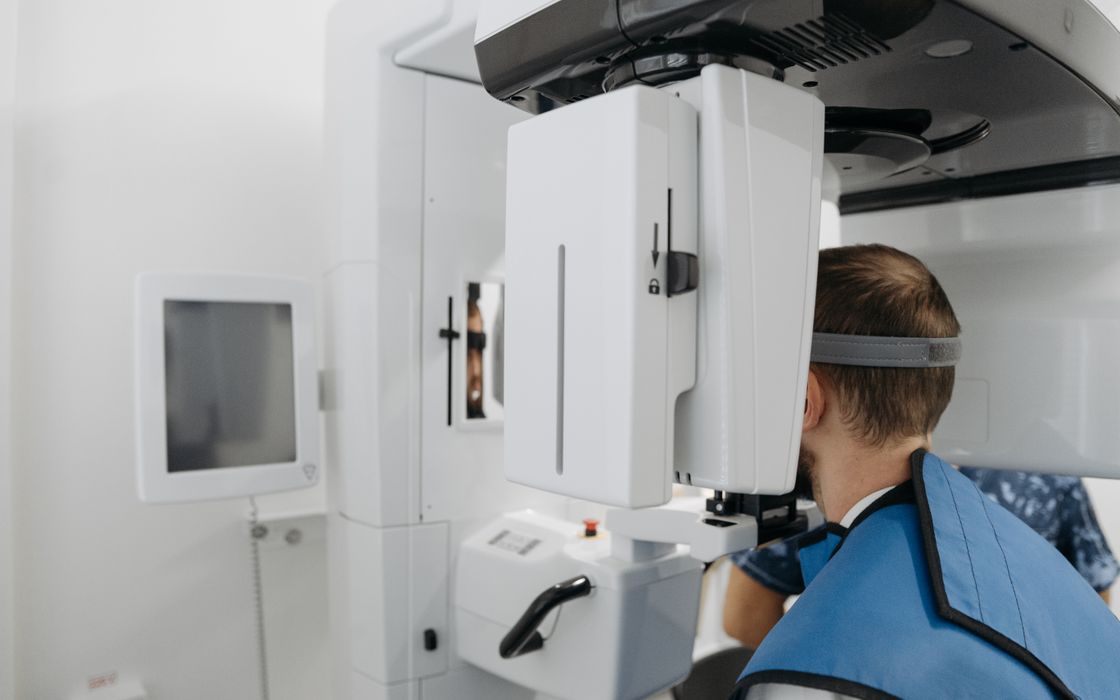
- People whose 3D scan shows too little bone for implants, often after long-term tooth loss, gum disease, injury or denture wear
- Patients planning implants in the upper back jaw, where the sinus often leaves only thin bone
- Anyone having a tooth removed who plans an implant later (socket preservation)
- Good candidates are in reasonable general health, have had gum disease treated and will stop smoking, which raises the risk of complications and graft failure
- Extra caution is needed with poorly controlled diabetes, chronic sinus problems, past head and neck radiotherapy or bone-affecting medicines such as bisphosphonates
The procedure step by step
3D scan and plan
A CBCT scan shows your bone and sinus, and the surgeon decides whether you need a graft, which type, and whether implants can go in at once.
Anaesthetic
Most grafts and sinus lifts are done under local anaesthetic, often with sedation, and the gum is lifted to expose the bone.
Placing the graft
Graft is packed into the defect, usually under a membrane. A closed sinus lift raises the sinus floor through the implant site; an open lift uses a small side window to lift the sinus membrane and pack graft beneath it.
Stitches and aftercare
You go home the same day with pain relief and prescribed medicines; stitches usually come out after one to two weeks.
Healing, then implants
After several months a new scan confirms the bone, and implants are placed — or crowned, if they went in with the graft. This is usually your second trip.
Recovery timeline
Days 1–3
Swelling and rest
Swelling, bruising and some bleeding are normal; use cold packs and eat soft food. After a sinus lift, don't blow your nose, sneeze with your mouth open and avoid straws and smoking.
Week 1
Initial healing
Initial recovery takes about a week, though many people manage desk work within a few days.
Weeks 1–2
Stitches out — and flying
A 2023 British Dental Journal review advises waiting at least two weeks after a sinus lift or larger bone graft before flying, with no sinus symptoms — agree your return date with your surgeon.
Months 3–12
The graft matures
Cleveland Clinic notes grafts need at least three months, large ones nine to 12; after a sinus lift, implants usually follow after about 4–12 months.
Second trip
Implants or crowns
A scan confirms the bone before implants or crowns. Cleveland Clinic advises having the implant within six to 12 months of healing, as unused grafted bone can shrink.
Results and how long they last
A successful graft becomes part of your jaw and can support implants long term: in a 2021 systematic review of lateral-window sinus lifts, implant survival was around 98%, whether or not the membrane had been torn and repaired. Occasionally a graft fails and has to be redone, and good oral hygiene, check-ups and not smoking matter as much as the graft itself.
Risks and how to reduce them
- Sinus membrane perforation, the most frequently reported sinus-lift complication — a 2021 systematic review found tears in about 3 in 10 lateral-window procedures, most repaired during surgery
- Sinusitis or graft infection, more likely after a perforation — report nasal discharge, worsening pain or fever
- Graft failure or shrinkage needing regrafting, more likely in smokers and with some medical conditions
- Wound opening or membrane exposure, which lets bacteria reach the graft
- Swelling, bruising, nosebleeds and pain in the first days
- Nerve injury and numbness, mainly with lower-jaw grafts or when bone is taken from the jaw
Don't let the travel plan set the surgical plan
Be wary of implants and fixed teeth in one short trip despite major bone loss, skipped 3D scans and vague “bone powder” extras. Grafted bone needs time, and flying soon after a sinus lift risks painful pressure problems. An honest plan with a second trip beats one built around a holiday.
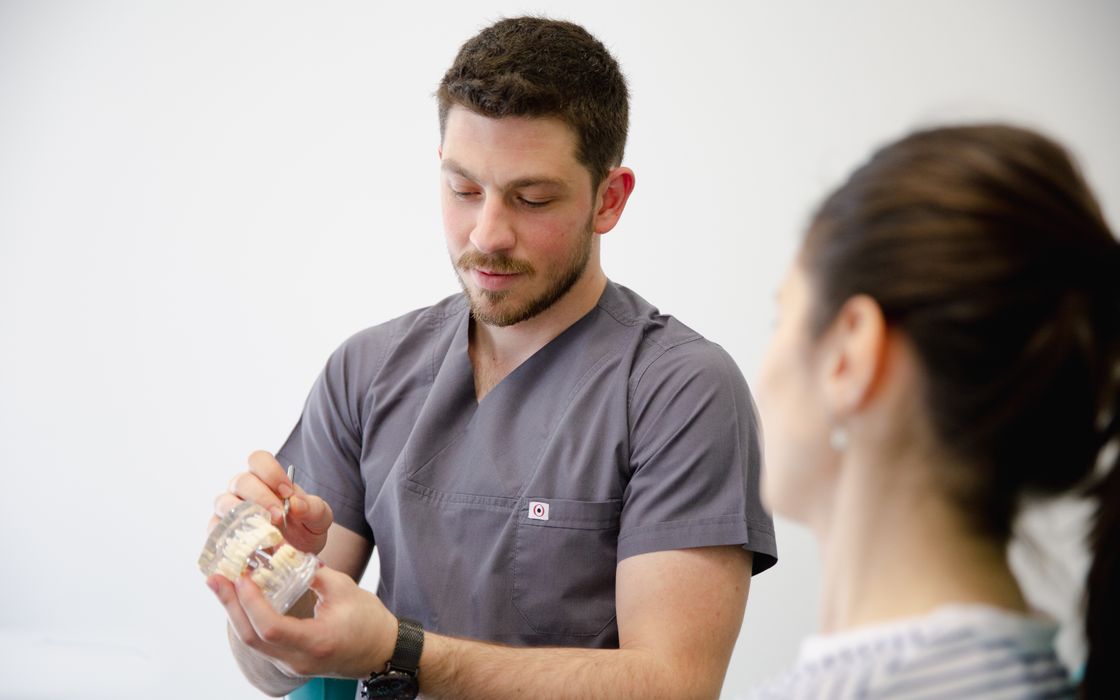
Cost of bone grafting and sinus lift in Turkey and what's included
€150–€1,500
Typical price per graft site or sinus side
None
Hospital stay — outpatient, local anaesthetic
7–14 days
First trip; a second trip usually follows
| Procedure or item | Typical 2026 price in Turkey |
|---|---|
| Socket preservation (per socket) | €100–€300 |
| Particulate graft with membrane (per site) | €150–€600 |
| Block bone graft (per site) | €450–€1,000 |
| Closed (crestal) sinus lift (per side) | €250–€800 |
| Open (lateral window) sinus lift (per side) | €600–€1,500 |
| 3D CBCT scan | Often included in implant quotes — check |
| Implants, abutments and crowns | Priced separately |
Guide ranges from published Turkish price lists and hospital-group guides (2026); premium hospitals may charge more.
Grafting is often quoted on top of an implant package, so compare total costs, not headline implant prices, and check whether the scan, graft material and membrane (with brands), follow-up scans, medication and both trips' hotel and transfers are included. Get free quotes and compare them with the dental implants price you have been offered.
Choosing a clinic safely
- A clinic licensed by the Turkish Ministry of Health with its health-tourism authorisation (Uluslararası Sağlık Turizmi Yetki Belgesi); some hospitals also hold JCI accreditation
- An oral and maxillofacial surgeon, periodontist or dentist with documented grafting experience — check who will operate and their registration in Turkey
- A CBCT scan before any final quote, and a written plan covering graft type, material, healing time and number of trips
- A written aftercare and revision policy: who pays for regrafting and extra travel if the graft fails
- Before-and-after scans of similar cases, which say more than smile photos
- Red flags: implants in one short trip despite major bone loss, no scan, vague “bone powder” prices, or pressure to decide on the spot
Compare like with like
Send the same CBCT scan to several clinics for itemised plans. If one needs no graft where others need a sinus lift, ask why: it may use shorter or angled implants — or cut corners.
Bone grafting is the part of implant treatment you can't rush. A clinic that builds real healing time into your plan, even with a second trip, is usually the one to trust.
— WhichClinic Editorial Team
Clinics offering Bone Graft & Sinus Lift in Istanbul
Stars are Google ratings (third-party data), not WhichClinic reviews. Listings are compiled from public business data. Confirm that the clinic performs this procedure when you request a quote.
- 15.0 (1,451)
Beyoğlu, Istanbul
- 25.0 (1,039)
Fatih, Istanbul
- 3 5.0 (792)
- 45.0 (506)
Ataşehir, Istanbul
- 55.0 (401)
Beşiktaş, Istanbul
- 65.0 (356)
Pendik, Istanbul
- 75.0 (336)
Üsküdar, Istanbul
- 85.0 (205)
Eyüpsultan, Istanbul
Get free quotes for Bone Grafting & Sinus Lift (Bone Augmentation for Implants)
Tell us what you need and receive tailored offers from matched clinics — free, private and with no obligation.
- Verified badge only after document checks
- Free and no obligation
- Compare multiple offers side by side
Your details stay private — shared only with matched clinics.
Frequently asked questions
No. Many people have enough bone. A graft is needed when a 3D scan shows the bone is too thin or too short to hold an implant securely — common after long-term tooth loss, gum disease, or in the upper back jaw under the sinus. Shorter or angled implants can sometimes avoid a graft.
It depends on the graft. Cleveland Clinic notes that a graft needs at least three months to heal and that large grafts can take nine to 12 months; after a sinus lift, the American Academy of Periodontology says implants usually follow after about 4–12 months. Sometimes implants can be placed at the same time as the graft.
It is done under local anaesthetic, often with sedation, so you should not feel pain during the procedure. Afterwards, swelling, bruising and some discomfort for a few days are common and are usually managed with ordinary painkillers.
Ask your surgeon before booking. A 2023 British Dental Journal review advises waiting at least two weeks after a sinus lift or larger bone graft before flying, and making sure you have no sinus symptoms, because cabin pressure changes can cause pain and inflammation in the healing sinus.
It can be your own bone, processed human donor bone, processed animal bone (usually bovine) or a synthetic substitute, often covered with a protective membrane. All are widely used; ask your surgeon which material and brand they plan to use and why.
Published Turkish price lists for 2026 put most bone grafts at roughly €150–€600 per site and sinus lifts at about €250–€1,500 per side, depending on the technique and materials. These are usually added to the cost of the implants, so compare total quotes.
Small tears are common and are usually repaired during the operation, for example with a collagen membrane. A 2021 systematic review found that implants placed under repaired membranes survived at similar rates to those under intact membranes. A large tear may mean stopping and trying again after healing.
Depending on your anatomy: shorter implants, angled implants as used in All-on-4, a bridge or a denture. In severe upper-jaw bone loss, zygomatic implants anchored in the cheekbone are an option in specialist hands — an advanced procedure with its own risks, including sinusitis.
Sources
Medical background was checked against these references. This guide is educational and does not replace a consultation with a qualified doctor.
- Cleveland Clinic — Dental bone graft
- American Academy of Periodontology — Sinus augmentation
- International Journal of Oral Science (PMC) — Maxillary sinus floor augmentation: anatomical factors and a decision tree
- International Journal of Implant Dentistry (PMC) — Schneiderian membrane perforation in lateral sinus lifts and implant survival
- British Dental Journal (PMC) — Dental tourism and the risk of barotrauma and barodontalgia
- International Journal of Implant Dentistry (PMC) — Long-term treatment outcomes with zygomatic implants