
Root Canal Treatment in Turkey
Save an infected tooth instead of losing it: how root canal treatment works in Turkey, what it costs and when it should not be done.
- Typical package price in Turkey (2026)
- €100 – €400
- Time in Turkey
- 2–3 days; 5–7 with a crown
Indicative range from published package prices; your written quote depends on your case. · Updated:
Full specialty guide
At a glance
- Typical package price in Turkey (2026)
- €100 – €400
- Procedure time
- 1–2 hours per visit (1–2 visits)
- Anaesthesia
- Local anaesthetic
- Hospital stay
- None (outpatient)
- Time in Turkey
- 2–3 days; 5–7 with a crown
- Recovery
- Same day; tender for a few days
- Final result
- Relief in days; X-ray check at ~1 year
Root canal treatment (endodontics) saves a tooth whose inner pulp is inflamed or infected: the dentist cleans out the canals, disinfects them and seals them, usually instead of pulling the tooth. In Turkey it is often part of a larger crown or smile-makeover plan. In 2026 a root canal typically costs about €100–€400 per tooth (the crown is extra) and needs one or two visits over 2–3 days, or 5–7 days if a crown is made on the same trip.
What root canal treatment is and how it works
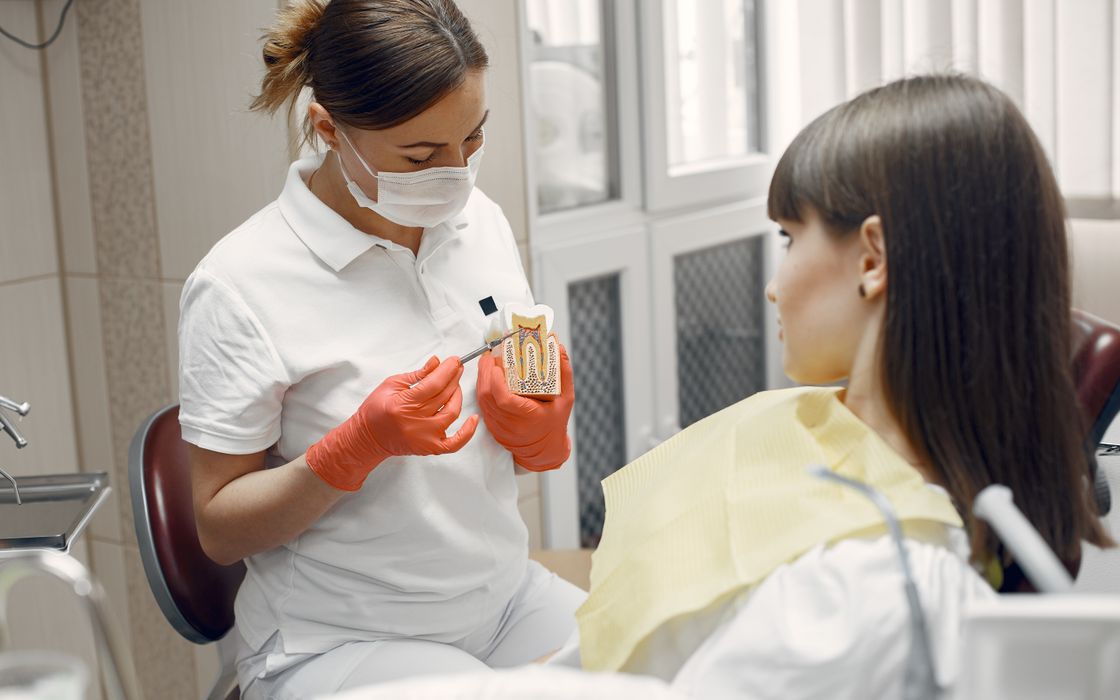
Inside every tooth is the pulp, soft tissue with nerves and blood vessels that runs down thin channels in the roots: the root canals. Deep decay, a crack or a knock can let bacteria reach the pulp, which becomes inflamed or dies. Untreated, the infection can spread to the bone around the root tip and form an abscess. The dentist removes the pulp, cleans, shapes and disinfects each canal, fills it with a rubber-like material called gutta-percha and seals the tooth. A root-filled tooth no longer senses hot or cold, but it keeps working like a normal tooth.
Rubber dam, rotary files and magnification
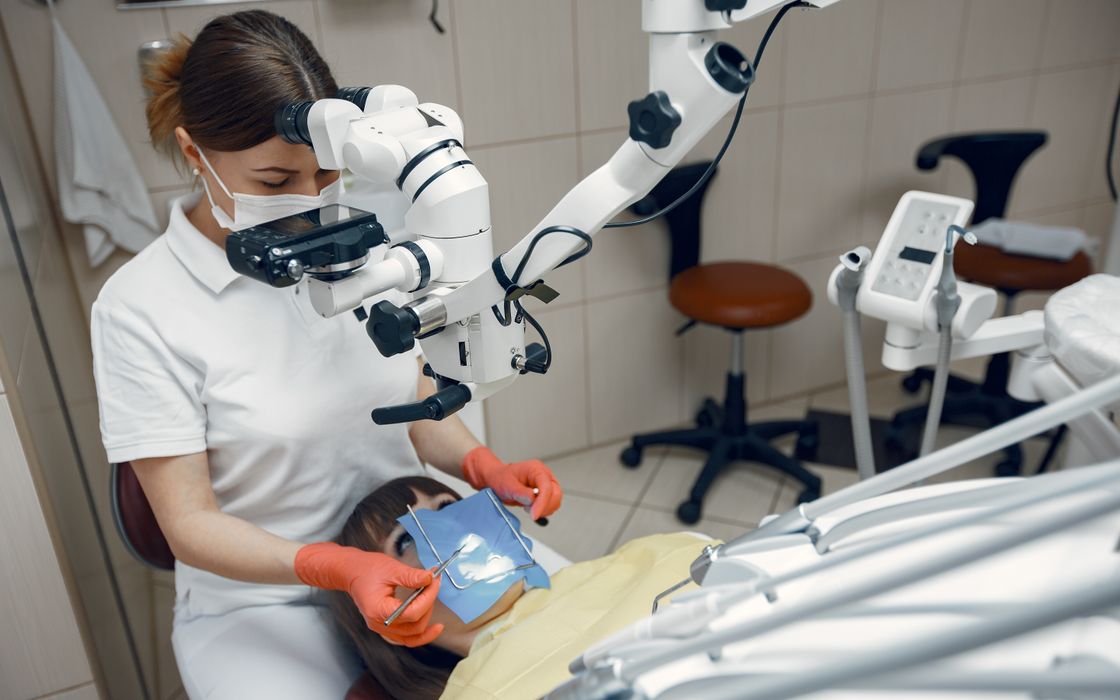
Disinfection matters more than gadgets, but some tools signal quality. A rubber dam, a thin sheet isolating the tooth, keeps saliva and bacteria out. Nickel-titanium rotary files shape curved canals consistently, and an electronic apex locator measures their length. Magnification with loupes or an operating microscope helps find narrow or extra canals; undetected canal anatomy is a known reason treated teeth fail to heal. A 3D cone-beam CT scan helps in complex cases but is not needed for every tooth.
Single-visit, multi-visit and other options
| Option | What it involves | Typically used for | Visits |
|---|---|---|---|
| Single-visit root canal | All canals cleaned and filled in one appointment | Uncomplicated cases, living or dead pulp | 1 |
| Multi-visit root canal | Medicated dressing between cleaning and filling | Severe infection, swelling, difficult anatomy | 2–3 |
| Retreatment | Old root filling removed, canals cleaned and refilled | Treated teeth that have not healed | 1–3 |
| Apicoectomy (root-end surgery) | Root tip removed through the gum and sealed | When retreatment is impossible or has failed | 1 plus a review |
| Extraction and replacement | Tooth removed, replaced by an implant or bridge | Split or unrestorable teeth | Several, over months |
A 2022 Cochrane review found single- and multiple-visit treatment similarly effective; single-visit patients reported more pain in the first week.
Who is a good candidate
- People whose tooth pulp is irreversibly inflamed or infected (lingering pain after hot or cold, pain on biting, swelling), confirmed by tests and an X-ray
- Teeth with enough structure and bone support to be restored afterwards, often with one of the dental crowns back teeth need
- Patients who would rather keep their own tooth than replace it with dental implants or a dental bridge
- Not suitable: teeth that are split vertically, have too little structure left or are loose from advanced gum disease; extraction may be the honest option
- Not justified: healthy teeth with no pulp disease. A root canal should not be done just to make shaping teeth for veneers or crowns easier
The procedure step by step
Diagnosis and X-rays
The dentist tests the tooth and takes an X-ray, sometimes a 3D scan. You should get a clear diagnosis and a written plan before treatment starts.
Anaesthetic and isolation
The tooth is numbed with local anaesthetic and isolated with a rubber dam, so treatment feels much like a filling.
Cleaning and shaping
Through a small opening, the pulp is removed and each canal is measured, shaped with files and rinsed repeatedly with disinfectant.
Filling the canals
The canals are sealed with gutta-percha. With severe infection, a medicated dressing is placed first and the filling is done at a second visit.
Restoring the tooth
A filling closes the opening and an X-ray checks the result. Back teeth usually need a crown or onlay, sometimes with a post.
Recovery timeline
Same day
Numbness wears off
Wait until the anaesthetic wears off before eating. Most people return to work the same day.
Days 1–3
Tenderness
The tooth may feel sore, especially when biting. Over-the-counter painkillers such as ibuprofen or paracetamol usually help.
Up to 2 weeks
Settling down
Soreness fades steadily. Avoid hard food on that side and contact the clinic if swelling or pain gets worse.
Weeks 1–4
Permanent restoration
The crown or permanent filling should follow promptly: a temporary filling is not a long-term seal, and delays let bacteria back in.
About 1 year
Healing check
A follow-up X-ray shows whether infection around the root tip has healed, which can take a year or more. Share your records with your dentist at home.
Results and how long they last
Root canal treatment removes the source of infection and pain, and most treated teeth heal. The Oral Health Foundation notes that a root-filled tooth lasts on average 5–10 years, and many last much longer with good care. Success depends on whether infection had reached the bone, how thoroughly the canals were cleaned and sealed, how soon the tooth was restored and your oral hygiene. A treated front tooth can darken over time; internal whitening or a crown usually fixes this. If a tooth does not heal, retreatment is often possible; the American Association of Endodontists lists missed canals, a delayed crown, new decay and cracked restorations among the reasons.
Risks and how to reduce them
- Persistent or returning infection, often from a missed canal or a leaking restoration; a rubber dam, magnification and a prompt crown reduce the risk
- Tooth fracture: root-filled back teeth are more brittle, so protect them with a crown or onlay and avoid hard food until then
- Pain or a flare-up: soreness for a few days is common; marked swelling is less common and needs a review
- Procedural problems such as a file separating in a canal or a root perforation; uncommon, and likelier in narrow, curved or calcified canals
- Nerve damage: rare, but listed by MedlinePlus; lower back teeth sit close to a major jaw nerve
- Losing the tooth anyway: some teeth cannot be saved, so ask for an honest prognosis before you start
Red flag: root canals on healthy teeth
In Turkey, root canals are often bundled into veneer, crown or Hollywood-smile packages. Sometimes this is necessary. But healthy teeth should not be root-filled to make aggressive shaping easier or to fit more crowns into one trip, and heavy preparation can itself injure the pulp. If a plan includes root canals on teeth that do not hurt, ask for the X-ray and diagnosis for each tooth and get a second opinion.
Cost of root canal treatment in Turkey and what's included
€100–€400
Typical price per tooth (root canal only; crown extra)
None
Hospital stay: outpatient treatment under local anaesthetic
2–3 days
Time in Turkey (5–7 days if a crown is made)
| Tooth or service | Usual number of canals | Guide price per tooth |
|---|---|---|
| Front tooth (incisor or canine) | Usually 1 | €100–€200 |
| Premolar | 1–2 | €120–€250 |
| Molar | 3–4 | €150–€400 |
| Retreatment of an old root canal | Varies | Usually at or above molar prices |
| Root canal plus a zirconia crown | — | €300–€850 |
Guide prices for 2026, per tooth. X-rays and local anaesthetic are usually included; crowns, 3D scans, travel and hotels are often extra.
Prices vary with the tooth, the difficulty of its canals and what is included, so treat these figures as a guide, not a quote. Some clinics advertise low starting prices that leave out X-rays, the permanent filling or the crown. Ask for a written, itemised plan per tooth that includes the final restoration and explains what happens if symptoms return. You can get free quotes from several clinics to compare like with like.
Choosing a clinic safely
- A Ministry of Health-licensed clinic or hospital (some also hold international accreditation such as JCI) with the ministry's health-tourism authorisation certificate (Uluslararası Sağlık Turizmi Yetki Belgesi)
- A named dentist: an endodontist (Endodonti uzmanı) or an experienced dentist registered with the Turkish Dental Association, especially for molars and retreatments
- Rubber dam use, X-rays before and after treatment, and digital copies for you
- A written diagnosis and quote per tooth, covering the crown, the retreatment policy and support if pain returns after you fly home
- Before-and-after X-rays of the clinic's own root canal work; smile photos say little about treatment inside the tooth
- Red flags: pressure to sign on the day, prices far below the market, and plans to crown or root-fill many teeth that do not hurt
Keep your dentist at home in the loop
Send recent X-rays before you travel and ask for copies of every X-ray plus a treatment summary afterwards. The UK General Dental Council advises checking in advance who you can contact after treatment and who pays for remedial work.
A root canal is worth doing when it saves a tooth that genuinely needs it, and worth refusing when it is offered on a healthy tooth to make a package easier.
— WhichClinic Editorial Team
Clinics offering Root Canal Treatment in Istanbul
Stars are Google ratings (third-party data), not WhichClinic reviews. Listings are compiled from public business data. Confirm that the clinic performs this procedure when you request a quote.
- 15.0 (250)
Üsküdar, Istanbul
- 25.0 (151)
Kadıköy, Istanbul
- 35.0 (66)
Üsküdar, Istanbul
- 44.9 (454)
Üsküdar, Istanbul
- 55.0 (61)
Şişli, Istanbul
- 64.9 (192)
Kadıköy, Istanbul
- 74.9 (133)
Bayrampaşa, Istanbul
- 84.9 (112)
Bahçelievler, Istanbul
Get free quotes for Root Canal Treatment (Endodontics)
Tell us what you need and receive tailored offers from matched clinics — free, private and with no obligation.
- Verified badge only after document checks
- Free and no obligation
- Compare multiple offers side by side
Your details stay private — shared only with matched clinics.
Frequently asked questions
The treatment itself should not be painful: the tooth is numbed with a local anaesthetic, much as for a filling. Afterwards the tooth and gum can feel tender for a few days, and over-the-counter painkillers usually help. Pain that gets worse, or swelling, should be checked by the dentist.
Many root canals are completed in one visit; others need two or three, with a medicated dressing between appointments. A 2022 Cochrane review found single- and multiple-visit treatment similarly effective, although single-visit patients reported more pain in the first week. The dentist should decide based on the infection, not on your flight time.
Back teeth (premolars and molars) usually do, because root-filled teeth become more brittle and a crown or onlay protects them from breaking. A front tooth with plenty of healthy structure may only need a filling. Either way, the permanent restoration should not be delayed, because a leaking temporary filling can let bacteria back in.
In 2026 a root canal in Turkey typically costs about €100–€400 per tooth: front teeth sit at the lower end and molars or retreatments at the upper end. With a zirconia crown, one tooth usually comes to about €300–€850. These are guide prices; ask for a written quote that lists what is included.
The Oral Health Foundation says a root-filled tooth lasts on average 5–10 years, and many last much longer with good care. Its lifespan depends on how well the canals were cleaned and sealed, how soon it was crowned, and on your brushing, flossing and regular check-ups.
A tooth that does not heal, or becomes reinfected later, can often be retreated: the old filling is removed and the canals are cleaned and sealed again. If that is not possible, root-end surgery (apicoectomy) is an option, and if the tooth cannot be saved it can be extracted and replaced with an implant or a bridge.
Often not. For a single straightforward root canal, flights and accommodation can cancel out the saving, and an acutely painful or swollen tooth should be treated where you are. Treatment in Turkey makes more sense as part of a larger plan, provided you arrange follow-up with a dentist at home.
Generally no. Veneers are meant to remove as little tooth as possible, and a healthy tooth rarely needs its pulp removed for cosmetic work. If a plan needs so much reduction that several nerves must be taken out, ask for the diagnosis for each tooth and get a second opinion.
Sources
Medical background was checked against these references. This guide is educational and does not replace a consultation with a qualified doctor.
- NHS — Root canal treatment
- MedlinePlus (U.S. National Library of Medicine) — Root canal
- Oral Health Foundation — Root canal treatment
- American Association of Endodontists — Endodontic retreatment
- Cochrane systematic review (2022) — Single versus multiple visits for endodontic treatment of permanent teeth
- General Dental Council (UK) — Going abroad for dental treatment