
Orthodontics in Turkey
Straighten teeth with braces or clear aligners — but be honest: orthodontics is a long journey, not a quick trip abroad.
- Typical package price in Turkey (2026)
- €1,500 – €4,000
- Time in Turkey
- 1–2 days (initial visit)
Indicative range from published package prices; your written quote depends on your case. · Updated:
Full specialty guide
At a glance
- Typical package price in Turkey (2026)
- €1,500 – €4,000
- Procedure time
- 6–24 months of treatment
- Anaesthesia
- Usually none needed
- Hospital stay
- None (outpatient)
- Time in Turkey
- 1–2 days (initial visit)
- Recovery
- Same day; soreness for a few days
- Final result
- After 6–24 months; retainers for life
Orthodontics straightens crooked, crowded, or gapped teeth and corrects how the top and bottom teeth meet. It is one of the most rewarding dental treatments, but it is also unique among the procedures on this site: it takes months to years, not days. That single fact shapes everything about having it done in Turkey — the initial scan and fitting are quick, but the treatment itself continues long after you fly home.
How orthodontics works
All orthodontics works by applying gentle, continuous pressure that gradually moves teeth through the bone into a better position. With braces, this comes from brackets and wires adjusted at intervals. With clear aligners (such as Invisalign-type systems), it comes from a series of custom transparent trays you swap every one to two weeks. Because teeth move slowly and safely, the process cannot be rushed.
Braces versus clear aligners — and what suits travel
| Type | How it's managed | Travel-friendly? | Best for |
|---|---|---|---|
| Clear aligners | Trays swapped at home; remote check-ins | Yes — well suited | Mild to moderate cases, disciplined patients |
| Metal braces | In-chair adjustments every 4–8 weeks | Poor — needs local follow-up | Complex cases, all ages |
| Ceramic braces | In-chair adjustments, tooth-coloured | Poor — needs local follow-up | Complex cases wanting discretion |
| Lingual braces | In-chair adjustments, hidden behind teeth | Poor — needs local follow-up | Discreet correction of complex cases |
Clear aligners are the only option that fits comfortably with treatment mostly abroad or at a distance.
Who is a good candidate
- People with crowding, gaps, or a bite problem confirmed by an orthodontist
- For travel-based care, those suited to clear aligners rather than fixed braces
- Patients with healthy teeth and gums — any decay or gum disease is treated first
- Disciplined adults and teens who will wear aligners 20–22 hours a day
- Those who can arrange local check-ups or reliable remote monitoring for the months ahead
How treatment starts, step by step
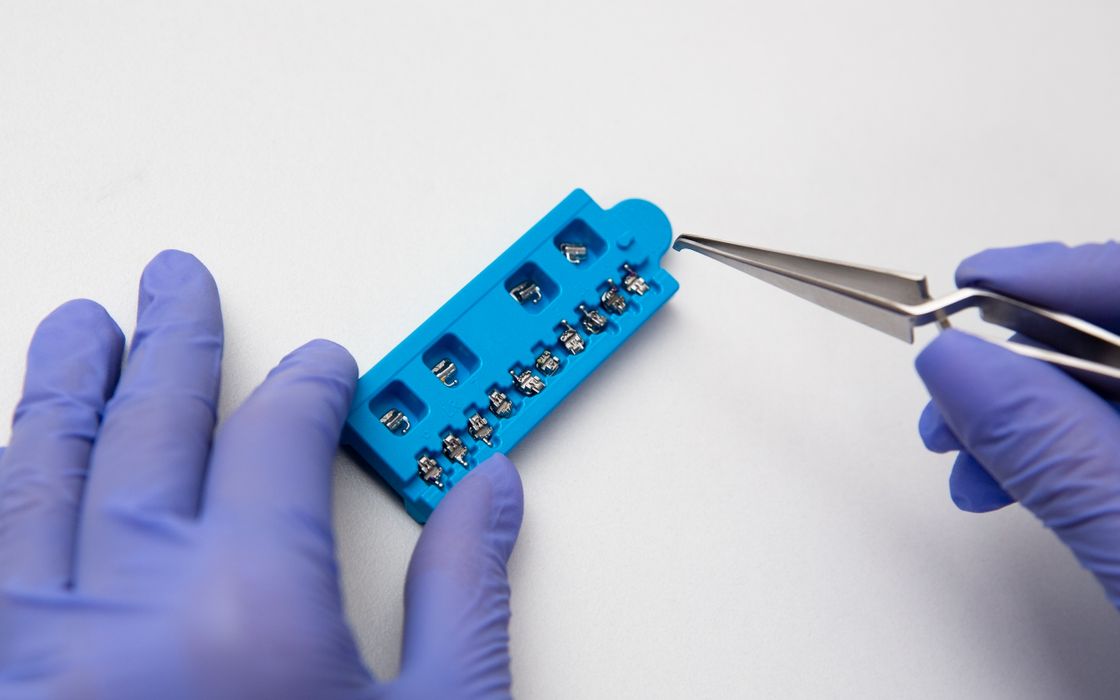
Records and diagnosis
X-rays, photos, and a 3D scan let the orthodontist plan the exact tooth movements.
Treatment plan
You see a digital simulation of the projected result and agree the approach and duration.
Fitting or first trays
Braces are bonded, or your first set of aligners and several future sets are handed over.
Instructions
You learn how to wear, clean, and progress through aligners, or how to care for braces.
Ongoing adjustments
Aligners are swapped at home on schedule; braces need in-person adjustments over many months.
The treatment timeline
Days 1–2
Scan and fitting in Turkey
Records taken and braces fitted, or aligners started. This is the only part that happens on your trip.
Week 1
Adjustment period
Mild pressure and soreness for a few days as teeth begin to move; over-the-counter pain relief helps.
Months 3–9
Active movement
Teeth shift steadily. Aligner cases progress at home; braces need periodic adjustments.
Months 6–24
Completion and retention
Treatment finishes and you move to retainers to hold the result — retainers are for life.
Results and how long they last
Orthodontics delivers lasting, often life-changing results when completed properly and followed by retainers. The honest caveat is the retention phase: teeth naturally try to drift back, so retainers must be worn indefinitely, usually nightly. Results are only as good as the follow-up — a case that is fitted abroad but poorly monitored can finish worse than one managed steadily closer to home.
Cost in Turkey and what's included
| Item | Typical price |
|---|---|
| Clear aligners (full course) | €1,500–€3,500 |
| Metal braces (both arches) | €1,500–€2,500 |
| Ceramic braces (both arches) | €2,000–€3,500 |
| Lingual (hidden) braces | €3,000–€4,000 |
| Retainers | Often extra — confirm in writing |
Turkey is cheaper due to lower labour and clinic costs, not lower-quality brackets or aligner systems.
€1,500
From, full aligner or braces course
6–24 mo
Typical treatment length
1–2 days
Initial visit; care then continues
Choosing a clinic safely
- Ask exactly how follow-up will work once you are home — this is the make-or-break question
- For fixed braces, confirm whether local adjustments in your country are arranged and who pays
- Prefer clear aligners if you plan to manage most of the treatment at a distance
- Get the full number of aligner sets and any refinement stages included, in writing
- Confirm retainers and their cost are covered, and how they will be renewed over time
Orthodontics is not ideal as fully-abroad care
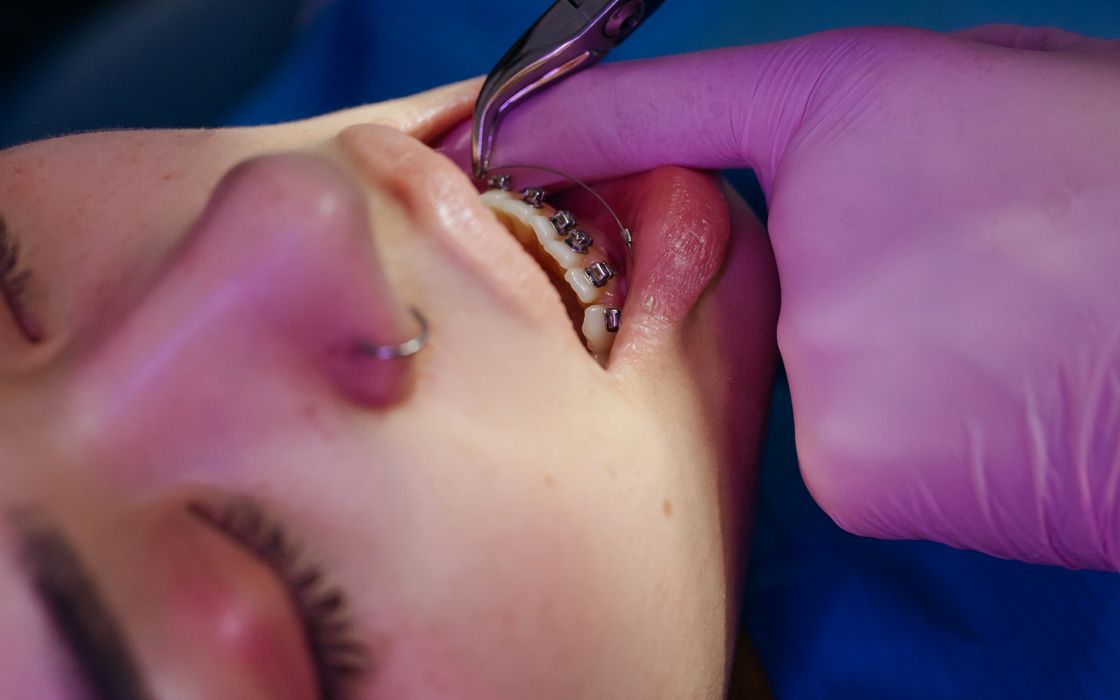
Fixed braces need regular in-chair adjustments; managing that from another country means repeated flights or an unmonitored case that can go wrong. Be very cautious of any clinic that fits braces and sends you home with no clear adjustment plan. If you want treatment mostly at a distance, clear aligners with proper remote monitoring are the only sensible route — and even they need occasional in-person checks.
Medical disclaimer
This page is general information, not personal orthodontic advice. Whether braces or aligners suit you, how long treatment will take, and how it should be monitored can only be determined by a qualified orthodontist after a full assessment.
Orthodontics is a marathon, not a sprint. The scan and fitting are the easy part — what protects your result is disciplined wear and reliable follow-up over the months that follow, wherever you have it done.
— WhichClinic Editorial Team
Clinics offering Orthodontics in Istanbul
Stars are Google ratings (third-party data), not WhichClinic reviews. Listings are compiled from public business data. Confirm that the clinic performs this procedure when you request a quote.
- 15.0 (1,175)
Bakırköy, Istanbul
- 2 5.0 (792)
- 35.0 (374)
Ataşehir, Istanbul
- 45.0 (336)
Üsküdar, Istanbul
- 5 5.0 (330)
- 65.0 (323)
Küçükçekmece, Istanbul
- 75.0 (308)
Üsküdar, Istanbul
- 85.0 (279)
Ataşehir, Istanbul
Get free quotes for Orthodontics (Braces & Aligners)
Tell us what you need and receive tailored offers from matched clinics — free, private and with no obligation.
- Verified badge only after document checks
- Free and no obligation
- Compare multiple offers side by side
Your details stay private — shared only with matched clinics.
Frequently asked questions
You can start it there, but you must plan the follow-up honestly. Clear aligners suit distance care because trays are swapped at home with remote check-ins. Fixed braces need regular in-person adjustments, so they are a poor fit unless you arrange local follow-up in your own country.
Most cases take between six months and two years, depending on how much the teeth need to move. Only the initial scan and fitting happen during your 1–2 day trip; the rest of the treatment continues over many months back home.
It is not painful when fitted, but you can expect mild soreness and pressure for a few days after braces are placed or when you move to a new set of aligners. This settles quickly and is easily managed with over-the-counter pain relief.
You can fly within a day or two of the initial fitting, as it is not surgery. The real question is not flying home but how your case will be monitored afterwards, which you should sort out before you travel.
The straightening is long-lasting, but teeth naturally try to drift back, so retainers must be worn indefinitely, usually every night. Skipping retainers is the most common reason people see their results relapse over time.
The main draw is cost: a full course of aligners or braces is often far cheaper than in the UK or Western Europe, with the same brands and systems. The trade-off is arranging follow-up, so weigh the saving against the practicalities of long-distance care.
Sources
Medical background was checked against these references. This guide is educational and does not replace a consultation with a qualified doctor.
- NHS — Braces
- Oral Health Foundation — Orthodontic treatment
- British Orthodontic Society — Retainers
- Cleveland Clinic — Braces: types and how they work
- Cochrane systematic review (2023, PMC) — Retention procedures for stabilising tooth position after treatment with orthodontic braces
- General Dental Council (UK) — Going abroad for dental treatment