How to Verify a Clinic Before You Book: A Patient's Checklist
Fake reviews and stock photos are easy to fake. A verifiable surgeon's licence is not. Here is the practical, step-by-step way to confirm a clinic is real — and exactly what to get in writing before you pay a deposit.

Foto: cottonbro studio / Pexels
Almost every serious complication story in medical tourism starts the same way: the patient trusted a brochure instead of a document. Verifying a clinic is not glamorous, but it is the single highest-leverage thing you can do before you travel — and almost none of it requires expert knowledge. This is a practical, do-it-yourself checklist: how to confirm the surgeon is real, what accreditation actually proves, how to catch fake photos and reviews, and exactly what to nail down in writing before any money leaves your account.
The clinic's licence is not the surgeon's licence
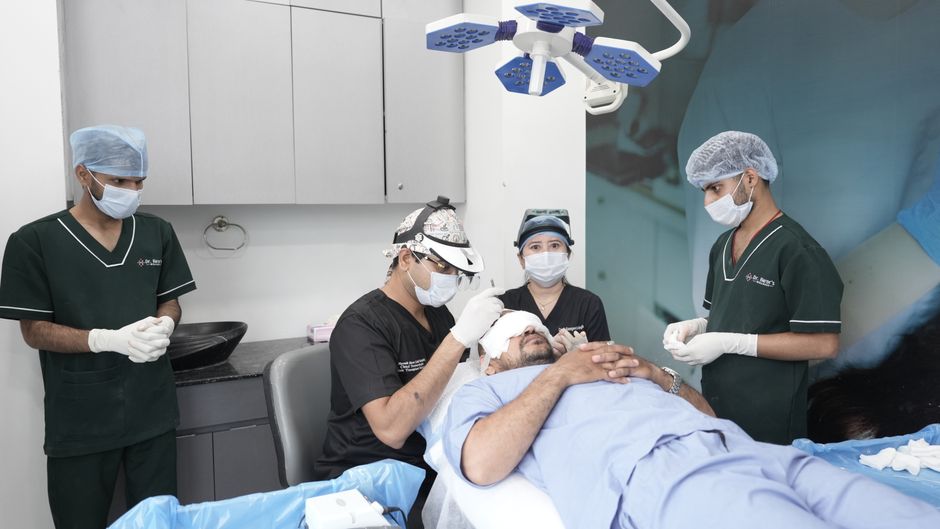
A clinic can be perfectly legal while the person holding the scalpel is not who you think. A facility licence and a health-tourism authorisation certificate confirm that the building and the business are approved to treat international patients. They say nothing about who operates on you. This gap is widest in high-volume fields like hair transplantation, where Turkish law requires a physician to perform the incisions and graft extraction, yet unlicensed technicians sometimes do the bulk of the work while the doctor only signs off. So split the question in two: is the clinic authorised, and is the specific person operating on me a licensed doctor? You need a yes to both.
How to confirm a doctor is really registered in Turkey
Get the surgeon's full name and registration number
Ask, in writing, for the full legal name of the doctor who will actually perform your procedure and their diploma registration number (diploma tescil numarası). A clinic that treats real patients will not hesitate to give it to you.
Check the registration against an official source
In Turkey every physician must be registered with a provincial medical chamber (tabip odası) under the Turkish Medical Association, and their status can be confirmed through the national e-Devlet (e-Government) system. Verify the name, that the licence is active, and that the person is a doctor — not a technician.
Match the specialty to your procedure
A licensed doctor is not automatically the right doctor. Confirm the registered specialty fits the operation — a cosmetic surgical procedure should be done by a plastic surgeon, not a general practitioner who took a weekend course.
What accreditation actually means
Accreditation is where marketing and reality drift apart. In Turkey the real legal baseline is the Ministry of Health's international health-tourism authorisation certificate — the Uluslararası Sağlık Turizmi Yetki Belgesi. Any clinic or intermediary legally treating foreign patients must hold one, and the Ministry keeps a register of authorised providers. JCI (Joint Commission International) and ISO 9001 are genuine quality signals, but they are voluntary and expensive, so many good smaller clinics do not carry them — and a glossy logo on a website proves nothing until you see the certificate number. Ask for the authorisation certificate first; treat JCI and ISO as bonuses, not substitutes.
| Signal | Green flag | Red flag |
|---|---|---|
| Surgeon | Names the operating surgeon in writing, with a registration number | "Our expert team" — no individual named |
| Documents | Sends the facility licence and health-tourism authorisation on request | Deflects, stalls, or calls the documents "confidential" |
| Price | Itemised quote with the revision policy included | One lump sum, "limited-time" pressure, cash only |
| Photos | Consistent, dated, patient-consented before / afters | Glossy stock images or results watermarked by other clinics |
| Aftercare | Written follow-up plan and complication policy | "Message us if there's a problem" and nothing in writing |
| Payment | Card payment to the registered company | Deposit to a personal account, crypto, or full prepayment |
No single row decides it. Two or more red flags is reason enough to walk away.
Catch the fake photos and fake reviews
- Reverse-image-search the before / after photos. Drag them into Google Images or TinEye. If the same "result" appears on ten other clinics' sites or in a stock library, it is not their patient.
- Watch for the tells of stock imagery: flawless studio lighting, models who look like models, cropped-out watermarks, and frames with no visible surgical detail or healing stages.
- Read reviews for specifics, not sentiment. Real patients name the surgeon, the procedure and the recovery. Fake reviews are short, generic, five-star, and posted in clusters on the same few days.
- Check the reviewer, not just the review. Profiles with a single review, no history, or the identical phrase repeated across Google, Trustpilot and Instagram are coordinated, not organic.
- Be suspicious of a wall of perfect scores. Every real surgeon has a three-star review somewhere. A spotless record more often reflects moderation than perfection.
- 1Who is the licensed surgeon that will personally perform my procedure, and what is their full name and medical registration number?
- 2Will that surgeon perform the entire operation? If technicians assist, exactly which steps do they carry out?
- 3What is your Ministry of Health international health-tourism authorisation certificate number?
- 4Can you send an itemised quote showing precisely what is and is not included — anaesthesia, medication, hotel, transfers, follow-up?
- 5What is your written policy if there is a complication or the result needs revision — who pays, and within what timeframe?
- 6What does aftercare look like once I fly home, and who is my named point of contact?
- 7What are your payment terms — deposit amount, accepted methods, and refund conditions if I cancel?
Never pay the full amount upfront
The most common health-tourism scam is not a botched surgery — it is a deposit that vanishes. Never wire 100% before you arrive, never pay in cash or crypto, and never send money to a person's private account instead of the registered company. Keep the deposit modest (a fifth to a third is normal), pay the balance in person, and use a method with chargeback protection such as a credit card. If a clinic pressures you to pay everything now for a "today only" price, that pressure is the red flag.
3
core documents to request in writing: facility licence, health-tourism authorisation, surgeon's registration
1
accountable named surgeon, responsible start to finish
20–30%
a sane deposit range — never pay the full amount upfront
Everything a clinic promises verbally is worth nothing once you are on the plane home. Get the surgeon's name, the itemised price, the complication and revision policy, the medication and post-op instructions, and your follow-up schedule in writing before you pay the balance. This is exactly the layer WhichClinic checks on your behalf — we verify provider licences and health-tourism authorisation certificates so the documents are confirmed before you ever send a deposit — but the habit is yours to keep on any platform: confirm first, pay second.
A clinic can control its website, its photos and its reviews. The one thing it cannot fake is a verifiable licence and a name that stands behind your operation. Asking for both is not rude — it is the only real leverage you have.
— WhichClinic Trust & Safety
Häufig gestellte Fragen
WhichClinic Trust & Safety
Geprüft vom Redaktions- und Vertrauensteam von WhichClinic. Wir verifizieren Kliniken und veröffentlichen Ratgeber, die die Patientensicherheit über das Marketing stellen.