
Transplant de păr FUE
Transplant de păr FUE în Turcia: rezultate permanente și naturale din propria zonă donatoare — informații oneste, fără promisiuni exagerate.
- De la
- 1.800 EUR
- Ședere obișnuită
- 2-3 days
Prețurile sunt aproximative și se confirmă după o evaluare personală.
Ghid complet al specialității
În Turcia se fac mai multe transplanturi de păr decât în oricare altă țară din lume, iar în spatele majorității stă tehnica FUE. Pentru bărbații și femeile cu linia frontală în retragere, cu creștetul rărit sau cu o cicatrice de camuflat, atracția este simplă: un rezultat permanent obținut din propriul păr, la o fracțiune din prețurile britanice sau europene. Economia este reală — o explică costurile mai mici cu personalul, o piață a clinicilor extrem de competitivă și un curs de schimb favorabil — dar clinica potrivită și așteptările realiste contează mult mai mult decât prețul afișat.
Ce este FUE și cum funcționează?
FUE (Follicular Unit Extraction, extracția unităților foliculare) prelevează una câte una unitățile foliculare — grupări naturale de 1–4 fire — dintr-o zonă donatoare aflată în partea din spate și pe lateralele scalpului, unde firul de păr este rezistent genetic la cădere. Fiecare unitate este recoltată cu un punch rotativ sau manual foarte mic (aproximativ 0.7–1.0 mm), apoi implantată în canalele create în zona rărită. Pentru că foliculii sunt prelevați individual, nu sub formă de bandă, FUE nu lasă cicatrice liniară — doar urme punctiforme minuscule, care se estompează și rămân ascunse de firele din jur.
Tehnici și variante de FUE
| Metodă | Prin ce diferă | Recomandată pentru |
|---|---|---|
| FUE manual / cu micromotor | Extracție cu punch de oțel; canale deschise cu lame de oțel sau ace | Acoperire standard, la cost redus |
| FUE cu safir | Aceeași extracție; canale realizate cu lame de safir, pentru o plasare mai fină și mai densă | Linii frontale naturale, densitate mai mare |
| DHI (implanter Choi) | Extracția și implantarea sunt reunite într-un singur implanter — fără canale create în prealabil | Cazuri fără raderea capului, unghiuri precise |
O **grefă** este o unitate foliculară, nu un singur fir — 2,000–2,500 de grefe înseamnă adesea 4,000–6,000 de fire.
Cui i se potrivește FUE?
- Bărbaților cu alopecie androgenetică care au o zonă donatoare stabilă și sănătoasă în partea din spate a scalpului
- Femeilor cu rărire pe linia cărării sau cu alopecie de tracțiune (deseori fără raderea zonei receptoare)
- Oricui vrea să camufleze o cicatrice rămasă după o operație, o accidentare sau un transplant mai vechi prin bandă (FUT)
- Persoanelor la care căderea părului s-a stabilizat în mare parte — o cădere foarte incipientă și activă poate necesita mai întâi tratament medicamentos
- Candidaților realiști, care înțeleg că transplantul redistribuie părul existent, în loc să creeze fire noi
Procedura FUE pas cu pas
Consultația și planificarea
Chirurgul evaluează densitatea zonei donatoare, desenează o linie frontală naturală și stabilește un număr realist de grefe — de regulă la o consultație față în față sau printr-o analiză foto detaliată, înainte să pleci la drum.
Raderea zonei donatoare și anestezia
Zona donatoare (și adesea cea receptoare) este tunsă scurt și anesteziată local. Procedura se face în stare de veghe și, după instalarea anesteziei, este în mare parte nedureroasă.
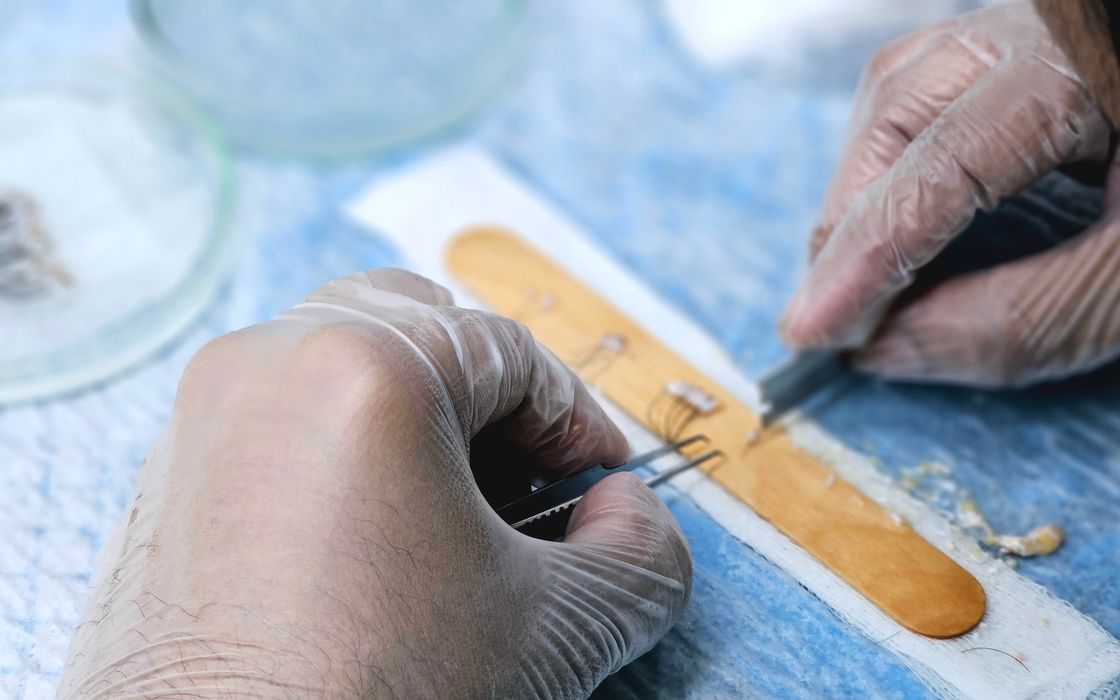
Recoltarea grefelor
Unitățile foliculare sunt prelevate una câte una cu un micropunch și păstrate într-o soluție de conservare răcită, ca să rămână viabile.
Crearea canalelor
Se realizează incizii minuscule la unghiul, adâncimea și direcția corecte — factorul care cântărește cel mai mult în naturalețea rezultatului.
Implantarea
Grefele sunt plasate în canale: unități cu un singur fir pe linia frontală și unități cu mai multe fire, mai dense, în spatele lor, pentru profunzime.
Recuperarea — la ce să te aștepți, săptămână de săptămână
Zilele 1–3
Edem și cruste
O ușoară umflare a frunții și cruste mici în jurul fiecărei grefe sunt normale. Majoritatea clinicilor fac prima spălare în ziua 2–3 și oferă instrucțiuni detaliate de îngrijire.
Zilele 7–10
Crustele dispar
Crustele cad, iar roșeața se estompează. Mulți se simt deja confortabil să revină la muncă sau să ia avionul spre casă.
Săptămânile 2–4
Căderea de șoc
Firele transplantate cad — această cădere de șoc este așteptată și nu înseamnă un eșec. Foliculii rămân pe loc și vor crește din nou.
Lunile 3–6
Începe creșterea
Apar fire noi și subțiri, care se îngroașă treptat. În această etapă progresul este inegal pe suprafața scalpului.
Lunile 9–12
Rezultatul complet
Densitatea și textura se maturizează. Rezultatul final se evaluează în jurul a 12 luni, uneori până la 18 pentru creștet.
Rezultate și permanență — sincer
Foliculii transplantați provin din păr donator rezistent la DHT, așa că, odată ce cresc din nou, sunt permanenți: cresc, încărunțesc și pot fi tunși ca restul părului. Transplantul mută însă o resursă limitată — nu îți poate reda densitatea de adolescent, iar niciun chirurg etic nu promite «acoperire completă» dintr-o zonă donatoare limitată. Majoritatea pacienților obțin o îmbunătățire naturală și mulțumitoare într-o singură ședință; suprafețele foarte mari sau o cădere care continuă pot cere ulterior o a doua ședință ori medicație (precum finasterida sau minoxidilul), pentru a proteja părul rămas. Fii sceptic față de oricine îți dă un procent exact de succes — în mâini bune supraviețuirea foliculilor este ridicată, dar rămâne o estimare, nu o garanție.
Costul în Turcia și ce include
| Element al pachetului | De obicei inclus? |
|---|---|
| Consultația chirurgului și planificarea grefelor | Da |
| Procedura FUE (până la numărul de grefe convenit) | Da |
| Medicamente, kit de îngrijire și prima spălare | De obicei |
| Nopți de cazare și transferuri de la aeroport | Frecvent (clinici cu pachete) |
| Zborurile și monitorizarea după 12 luni | De obicei nu |
Majoritatea clinicilor turcești tarifează pe procedură, nu pe grefă — cere în scris confirmarea plafonului de grefe.

€1,800
Preț de pornire uzual
2,000–4,000
Grefe într-o ședință
12 luni
Până la evaluarea rezultatului complet
Cum alegi clinica în siguranță
- Confirmă că chirurgul — nu doar tehnicienii — îți planifică linia frontală și execută sau supraveghează direct etapele critice
- Întreabă câte grefe se pot obține realist din zona ta donatoare și cere cifra în scris
- Caută cazuri reale, verificabile, cu fotografii înainte și după, la un stadiu de cădere similar cu al tău
- Verifică igiena, acreditările și faptul că vei avea o persoană de contact desemnată pentru îngrijirea post-operatorie
- Tratează ofertele cu «grefe nelimitate» și prețurile prea bune ca să fie adevărate drept semnale de alarmă
Atenție la recoltarea excesivă
Extragerea prea multor grefe într-o singură ședință poate rări permanent zona donatoare și poate lăsa un spate și laterale neuniforme, foarte greu de corectat. O clinică responsabilă îți protejează zona donatoare pe termen lung, în loc să maximizeze un singur rezultat — dacă simți că ești împins spre un număr foarte mare de grefe, cere o a doua opinie.
Precizare medicală
Acest ghid oferă informații generale, nu sfaturi medicale. Eligibilitatea, numărul de grefe și rezultatele așteptate variază în funcție de tipul tău de cădere a părului, de calitatea zonei donatoare și de starea de sănătate. Cere întotdeauna o evaluare personalizată de la un chirurg calificat înainte de a lua o decizie.
Un transplant de păr este redistribuirea unei resurse limitate, nu un tratament pentru chelie. Cele mai bune rezultate vin dintr-o planificare onestă, o zonă donatoare protejată și răbdare pe parcursul primului an.
— Echipa medicală WhichClinic
Primește oferte gratuite pentru Transplant de păr FUE
Spune-ne de ce ai nevoie și primești oferte personalizate de la clinici verificate — gratuit, confidențial și fără nicio obligație.
- Doar clinici verificate și acreditate
- Gratuit și fără obligații
- Compară mai multe oferte una lângă alta
Datele tale rămân confidențiale — partajate doar cu clinicile potrivite.