Hair Transplant in Turkey: A Patient's Guide to FUE, DHI and Realistic Results
Which method, how many grafts, and when you'll actually see hair. A decision-focused guide to hair transplants in Turkey — including the red flags that separate a real surgeon from a cheap package.
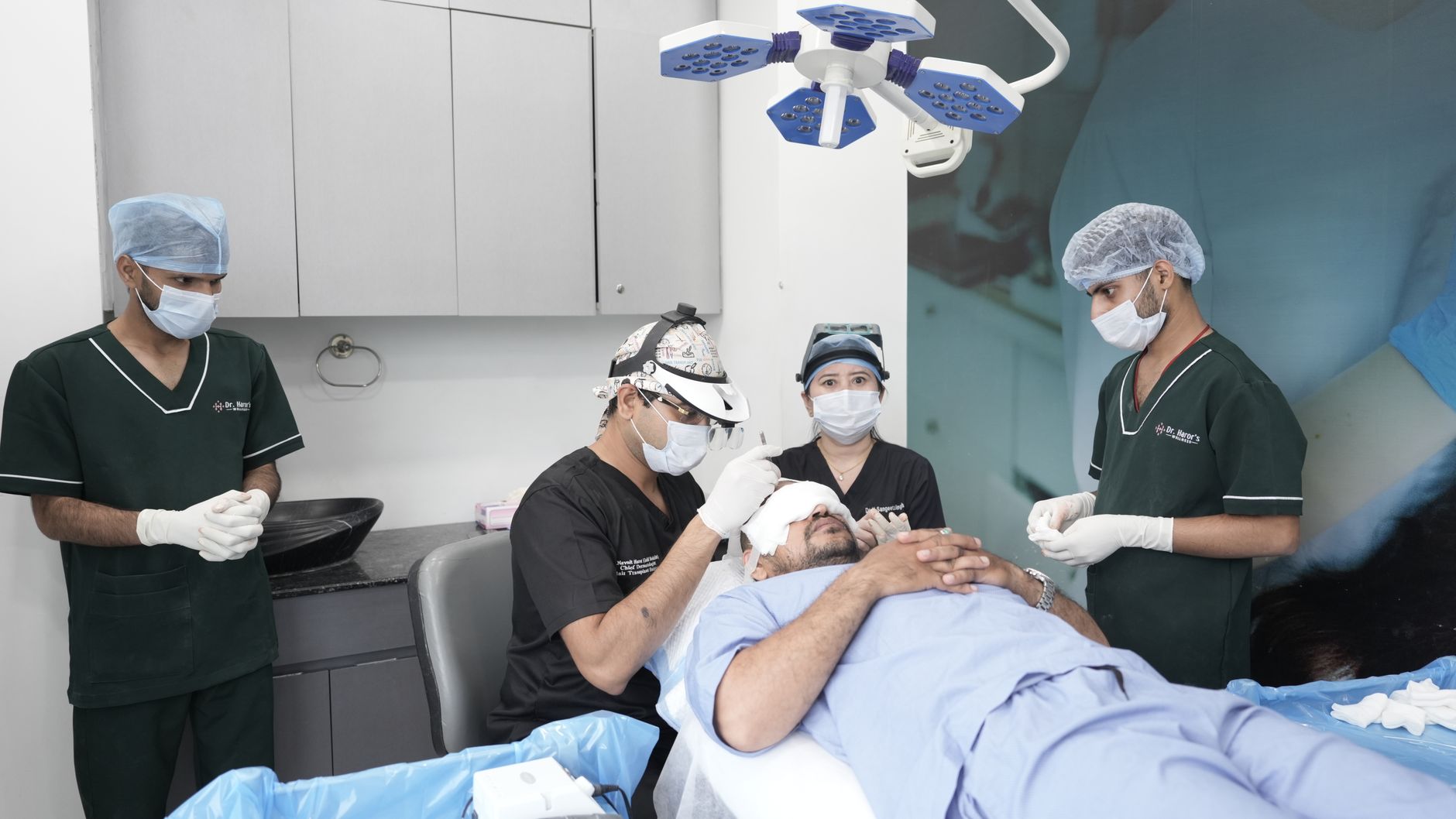
Foto: Dr. Haror's Wellness / Pexels
A hair transplant is the single most common procedure international patients travel to Turkey for — Istanbul alone runs some of the highest-volume clinics in the world. The surgical detail lives on a separate, more technical page; this guide is about the decisions you actually make: which method, how many grafts, when you'll see a result, and how to tell whether a clinic deserves your trust.
FUE and DHI: what the methods mean for you
Almost every modern transplant is a form of FUE — follicular unit extraction — where grafts are removed one by one from the donor area at the back and sides of your head, then placed into the thinning zone. DHI is a variant of FUE: instead of cutting the recipient channels first and placing grafts after, the surgeon uses a Choi implanter pen that opens the site and sets the graft in a single motion. Neither is universally 'better' — they suit different jobs, and a good clinic will explain why it recommends one for your case.
| Aspect | FUE | DHI |
|---|---|---|
| How grafts go in | Channels opened first, grafts placed after | Implanter pen opens and places in one motion |
| Best suited to | Large areas, high graft counts | Hairline detail, dense packing, smaller areas |
| Shaving | Usually a full shave | Often done unshaven or partial |
| Time & cost | Faster, usually cheaper per graft | Slower, usually pricier |
Both are FUE at their core; DHI changes how grafts are implanted, not how they are removed.
Grafts, the donor area, and realistic coverage
Your donor area is a fixed, lifetime resource. Surgeons harvest from the permanent zone at the back and sides, which is genetically resistant to balding — but it holds a limited number of grafts, and taking too many leaves the donor itself visibly thin. A 'graft' is not a single hair either: each follicular unit carries 1 to 4 hairs, so a 3,000-graft session can move 6,000–7,000 actual hairs. How much coverage that buys depends on your degree of loss (measured on the Norwood scale), your hair thickness, and the colour contrast between your hair and scalp.
2,000–4,500
grafts in a typical single session
1/3–1/4
of typical UK / US clinic prices
12–18 mo
until the final result matures
What the first 18 months actually look like
Weeks 1–2
Healing and scabbing
Small scabs form around each graft and fall away within about two weeks. Redness settles, and the grafts are secure by around day 10.
Weeks 2–6
Shock loss — this is normal
The transplanted hairs shed. This alarms most patients, but the follicle stays alive under the skin; only the visible shaft falls. Losing them is expected, not a failed transplant.
Months 3–6
Real growth begins
New hairs start pushing through from around month three or four. By month six you'll see meaningful — if still uneven — density that keeps improving.
Months 12–18
The final result
The transplant matures as thickness, texture and the hairline settle. Crown work and DHI cases can take the full 18 months.
Who actually holds the punch?
In many high-volume clinics the surgeon marks the hairline and leaves; unlicensed technicians perform the extraction and implantation for the rest of the day. Ask in writing which steps the doctor personally performs, and confirm they are a licensed physician, not a 'hair technician'. A named, verifiable surgeon who stays in the room is worth more than any package discount.
Reading before/afters and comparing clinics honestly
- Before/after photos: watch for different lighting, camera angle, or wet-vs-dry hair between the 'before' and the 'after' — genuine results are shot in matched conditions. Ask for the graft count, the time elapsed, and cases at a Norwood stage similar to yours.
- If your loss is advanced, be sceptical of galleries showing only thick-haired young patients — almost anyone looks good with a strong donor.
- '5,000 grafts in one day' at a rock-bottom price is a warning, not a bargain. Mega-sessions strain the donor and graft counts are often padded.
- Compare at least three clinics on the same specifics: the named surgeon, the graft estimate, the method, and what aftercare and revision policy you get if growth disappoints.
- A clinic that quotes a firm graft number before examining your scalp in detail is guessing.
A hair transplant is permanent — the good ones and the bad ones both last. The hour you spend verifying who will hold the punch matters more than the year you'll spend waiting for it to grow.
— WhichClinic Medical Team
Before you book
- Confirm in writing that a licensed surgeon — not a technician — performs your extraction and implantation.
- Compare at least three clinics on the same graft estimate, method and revision policy.
- Plan 12–18 months for the final result, and at least three nights in Turkey for the procedure and first check.
Not sure which clinic is right for you?
Tell us your goals and we'll match you with up to three vetted hair-transplant clinics — no spam, no details sold on.
Întrebări frecvente
WhichClinic Medical Team
Verificat de echipa editorială și de încredere WhichClinic. Verificăm clinicile și publicăm îndrumări care pun siguranța pacientului înaintea marketingului.