
Trapianto di capelli FUE
Trapianto di capelli FUE in Turchia: risultati permanenti e naturali con i tuoi capelli donatori — informazioni oneste, senza promesse gonfiate.
- A partire da
- 1800 €
- Soggiorno tipico
- 2-3 days
I prezzi sono indicativi e vengono confermati dopo una valutazione personale.
Guida completa alla specialità
In Turchia si eseguono più trapianti di capelli che in qualsiasi altro Paese al mondo, e dietro la maggior parte di essi c'è la tecnica FUE. Per uomini e donne con l'attaccatura che arretra, la chierica che si dirada o una cicatrice da mimetizzare, il richiamo è semplice: un risultato permanente ottenuto con i propri capelli, a una frazione dei prezzi britannici o europei. Il risparmio è reale — lo determinano costi del lavoro più bassi, un mercato di cliniche molto competitivo e un cambio favorevole — ma la clinica giusta e aspettative realistiche contano molto più del prezzo in vetrina.
Che cos'è la FUE e come funziona?
La FUE (Follicular Unit Extraction, estrazione di unità follicolari) preleva una alla volta le singole unità follicolari — raggruppamenti naturali di 1–4 capelli — da un'area donatrice nella zona posteriore e laterale del cuoio capelluto, dove il capello è geneticamente resistente alla calvizie. Ogni unità viene estratta con un micropunch rotante o manuale (circa 0.7–1.0 mm) e poi impiantata nei canali creati nella zona diradata. Poiché i follicoli vengono prelevati singolarmente e non in una striscia, la FUE non lascia cicatrici lineari: restano solo minuscoli segni puntiformi che sbiadiscono e vengono nascosti dai capelli circostanti.
Tecniche e varianti della FUE
| Tecnica | In cosa si differenzia | Più indicata per |
|---|---|---|
| FUE manuale / con micromotore | Prelievo con punch in acciaio; canali aperti con lame in acciaio o aghi | Copertura standard, con buon rapporto qualità-prezzo |
| FUE zaffiro | Stesso prelievo; canali incisi con lame in zaffiro per un posizionamento più fine e fitto | Attaccature naturali, densità maggiore |
| DHI (penna Choi) | Prelievo e impianto uniti in un'unica penna: nessun canale preinciso | Casi senza rasatura, angolazione precisa |
Un **innesto** è un'unità follicolare, non un singolo capello: 2,000–2,500 innesti corrispondono spesso a 4,000–6,000 capelli.
A chi è adatta la FUE?
- Uomini con calvizie androgenetica che dispongono di un'area donatrice stabile e sana nella zona posteriore del cuoio capelluto
- Donne con diradamento lungo la riga o alopecia da trazione (spesso senza rasare l'area ricevente)
- Chiunque voglia mimetizzare una cicatrice dovuta a un intervento, a un trauma o a un vecchio trapianto a striscia (FUT)
- Persone la cui caduta si è in gran parte stabilizzata: una perdita molto iniziale e in piena progressione può richiedere prima un trattamento medico
- Candidati realistici, consapevoli che il trapianto ridistribuisce i capelli esistenti anziché crearne di nuovi
La procedura FUE passo dopo passo
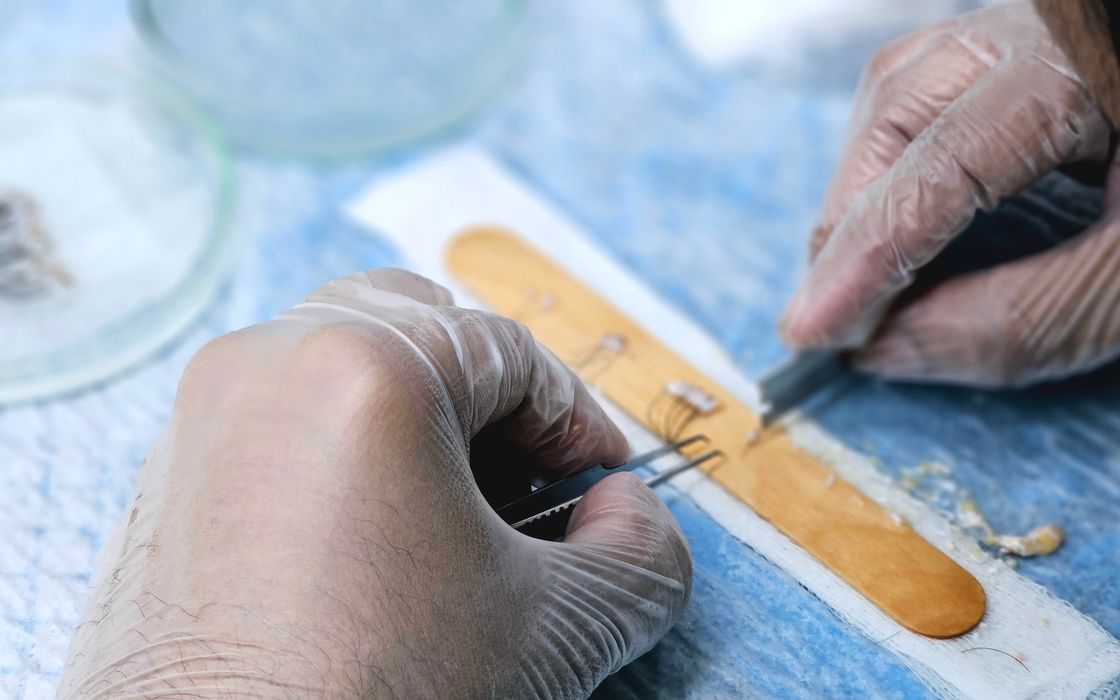
Visita e pianificazione
Il chirurgo valuta la densità dell'area donatrice, disegna un'attaccatura naturale e concorda un numero di innesti realistico, di norma con una visita di persona o un esame fotografico dettagliato prima della partenza.
Rasatura dell'area donatrice e anestesia
L'area donatrice (e spesso anche quella ricevente) viene accorciata e anestetizzata con anestesia locale. La procedura si svolge da svegli e, una volta anestetizzata la zona, è in gran parte indolore.
Prelievo degli innesti
Le unità follicolari vengono prelevate una a una con un micropunch e conservate in una soluzione refrigerata per mantenerle vitali.
Apertura dei canali
Vengono praticate incisioni minuscole con angolo, profondità e direzione corretti: è il fattore che più di ogni altro determina la naturalezza del risultato.
Impianto
Gli innesti vengono inseriti nei canali: unità a capello singolo sull'attaccatura e, dietro, unità pluricapello più fitte per dare profondità.
Recupero: cosa aspettarsi settimana per settimana
Giorni 1–3
Gonfiore e crosticine
Un lieve gonfiore della fronte e piccole crosticine attorno a ogni innesto sono normali. La maggior parte delle cliniche esegue il primo lavaggio al giorno 2–3 e fornisce indicazioni dettagliate per il post-operatorio.
Giorni 7–10
Le crosticine spariscono
Le crosticine si staccano e il rossore si attenua. Molti si sentono già a proprio agio per tornare al lavoro o prendere l'aereo per casa.
Settimane 2–4
Caduta da shock
I capelli trapiantati cadono: questa caduta da shock è prevista e non è un fallimento. I follicoli restano al loro posto e ricresceranno.
Mesi 3–6
Inizia la ricrescita
Iniziano a comparire capelli nuovi e sottili che via via si ispessiscono. In questa fase l'avanzamento è disomogeneo sulle diverse aree del cuoio capelluto.
Mesi 9–12
Risultato completo
Densità e consistenza maturano. Il risultato finale si valuta intorno ai 12 mesi, a volte fino a 18 per la chierica.
Risultati e permanenza — in tutta onestà
I follicoli trapiantati provengono da capelli donatori resistenti al DHT: una volta ricresciuti sono permanenti, crescono, incanutiscono e si possono tagliare come il resto dei capelli. Un trapianto però sposta una risorsa limitata: non può restituirti la densità di un adolescente e nessun chirurgo serio promette una «copertura totale» partendo da un'area donatrice limitata. La maggior parte dei pazienti ottiene un miglioramento naturale e soddisfacente in una sola seduta; aree molto estese o una caduta ancora in corso possono richiedere in seguito una seconda seduta, oppure farmaci (come finasteride o minoxidil) per proteggere i capelli che restano. Diffida di chi cita una percentuale di successo precisa: in mani esperte la sopravvivenza dei follicoli è alta, ma resta una stima, non una garanzia.
Costi in Turchia e che cosa è incluso
| Voce del pacchetto | Di norma inclusa? |
|---|---|
| Visita con il chirurgo e pianificazione degli innesti | Sì |
| La procedura FUE (fino al numero di innesti concordato) | Sì |
| Farmaci, kit per il post-operatorio e primo lavaggio | Di solito |
| Notti in hotel e transfer dall'aeroporto | Spesso (cliniche con pacchetto) |
| Voli e controlli oltre i 12 mesi | Di solito no |
La maggior parte delle cliniche turche applica un prezzo a procedura, non a innesto: fatti confermare per iscritto il tetto massimo di innesti.

€1,800
Prezzo di partenza tipico
2,000–4,000
Innesti in una seduta
12 mesi
Per valutare il risultato completo
Scegliere la clinica in sicurezza
- Verifica che sia il chirurgo — e non solo i tecnici — a progettare la tua attaccatura e a eseguire o supervisionare direttamente i passaggi critici
- Chiedi quanti innesti si possono ottenere realisticamente dalla tua area donatrice e fatti dare il numero per iscritto
- Cerca casi reali e verificabili di prima e dopo, con un grado di calvizie simile al tuo
- Controlla igiene, accreditamenti e la presenza di un referente con nome e cognome per il post-operatorio
- Considera le offerte di «innesti illimitati» e i prezzi troppo belli per essere veri come campanelli d'allarme
Attenzione al prelievo eccessivo
Prelevare troppi innesti in un'unica seduta può diradare in modo permanente l'area donatrice e lasciare una nuca e dei lati irregolari, molto difficili da correggere. Una clinica responsabile protegge la tua area donatrice sul lungo periodo invece di massimizzare un singolo risultato: se ti senti spinto verso un numero di innesti molto alto, chiedi un secondo parere.
Avvertenza medica
Questa guida fornisce informazioni generali, non consigli medici. Idoneità, numero di innesti e risultati attesi variano in base al tuo tipo di caduta, alla qualità dell'area donatrice e al tuo stato di salute. Prima di qualsiasi decisione, richiedi sempre una valutazione personalizzata a un chirurgo qualificato.
Un trapianto di capelli è la ridistribuzione di una risorsa limitata, non la cura della calvizie. I risultati migliori nascono da una pianificazione onesta, da un'area donatrice protetta e dalla pazienza durante il primo anno.
— Team medico di WhichClinic
Ricevi preventivi gratuiti per Trapianto di capelli FUE
Raccontaci di cosa hai bisogno e ricevi offerte su misura da cliniche verificate: gratis, riservato e senza impegno.
- Solo cliniche verificate e accreditate
- Gratis e senza impegno
- Confronta più offerte fianco a fianco
I tuoi dati restano riservati: condivisi solo con le cliniche corrispondenti.